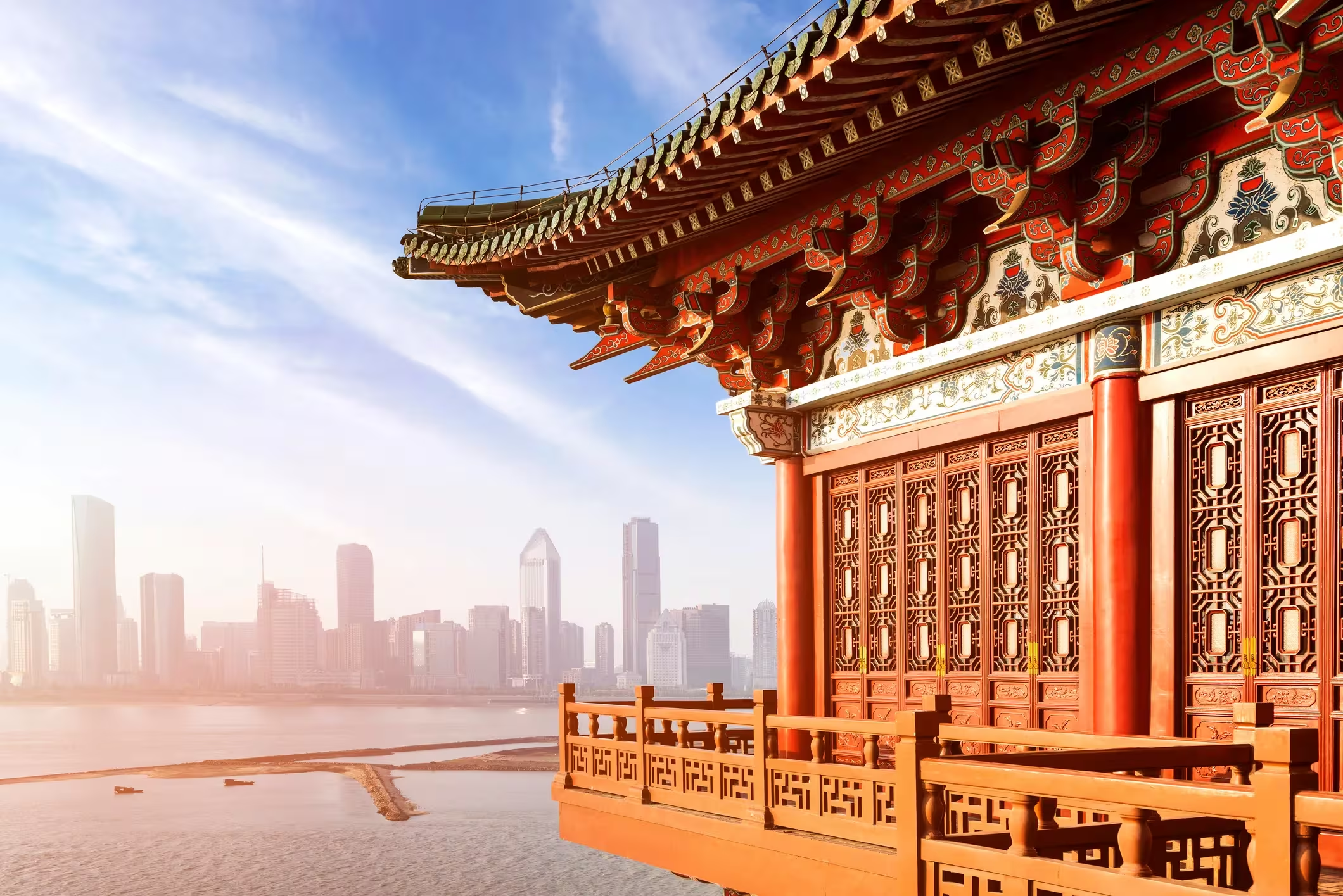
Day 8
Arrival in Beijing after a long train ride from (Huangshan).
Day 9
Summer Palace
On our first day in Beijing, we will go to the Summer Palace. The Summer Palace is a bit outside of the city, so we will have to leave on time. The Summer Palace in Beijing is a vast and stunning royal park that contains the largest and best-preserved imperial garden in China. It covers an area of nearly 300 hectares, with three-quarters of the space taken up by water. Recognized as a UNESCO World Heritage Site, it blends classical Chinese architecture with natural hills and lakes.
The best classic half-day walking route for the Summer Palace in Beijing starts at the North Gate (Beigongmen) and finishes at the East Gate, covering the major architectural highlights and scenic lake views. Start at Beigongmen Station (Exit D): Walk 3 minutes to the Summer Palace North Gate. Suzhou Street: Explore the re-created imperial riverside market street right inside the entrance. Longevity Hill & Four Great Regions: Climb the hill to see Tibetan-style Buddhist temples and the majestic Tower of Buddhist Incense. Paiyun Pavilion (Cloud-Dispelling Hall): Walk down the grand terraced structures facing the water. The Long Corridor: Stroll along the 728-meter painted wooden corridor lined with thousands of classical Chinese art masterpieces. Marble Boat (Qingyanfang): View the ornate stone pavilion structure on the edge of Kunming Lake. Hall of Joyful Longevity (Leshou Hall): Visit the former residence of Empress Dowager Cixi. Hall of Benevolence and Longevity (Renshou Hall): Finish your walk near the main East Gate exit and the Xiyuan Metro Station. Optional, you can do a boat ride to South Lake Island.
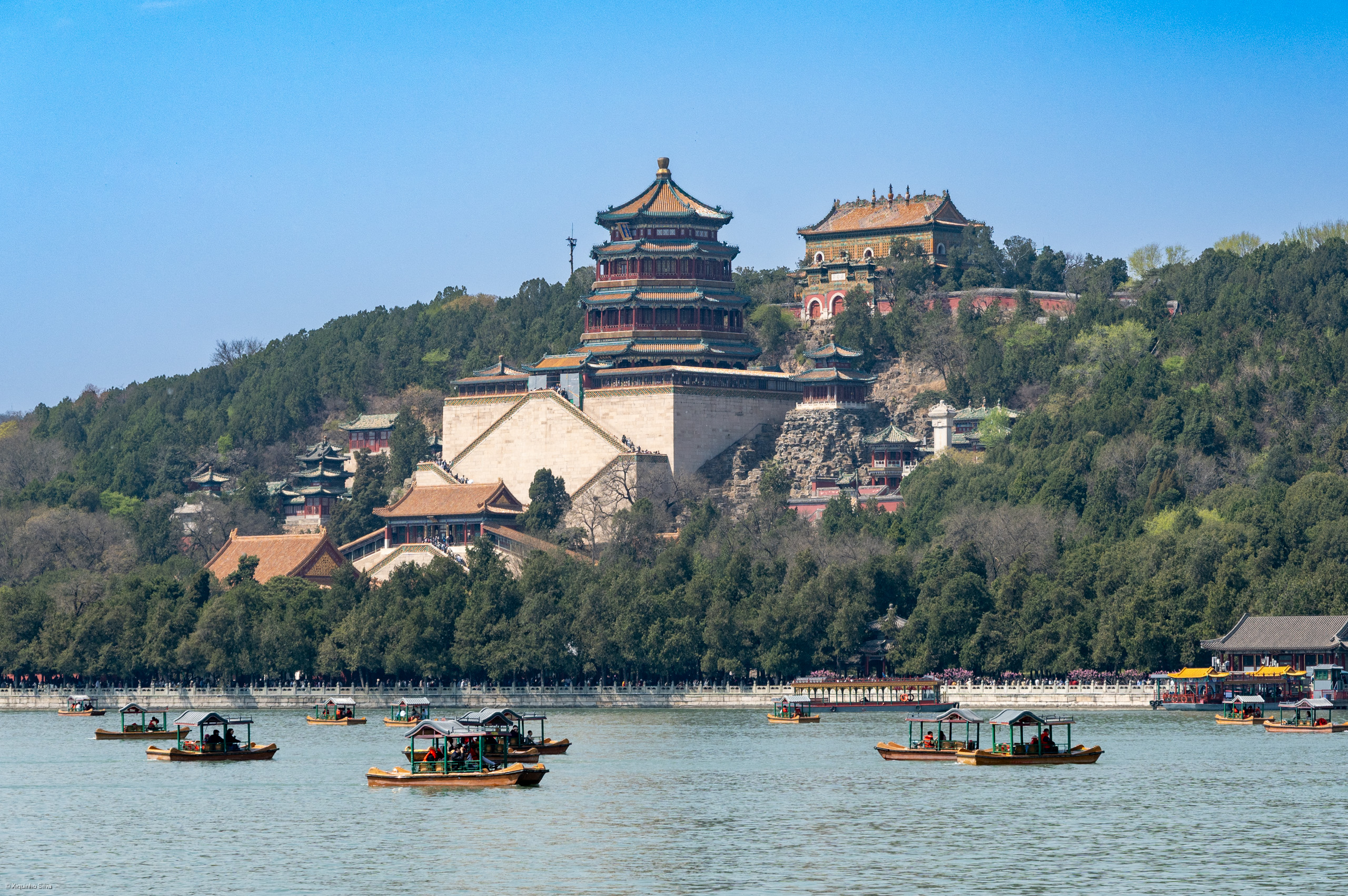
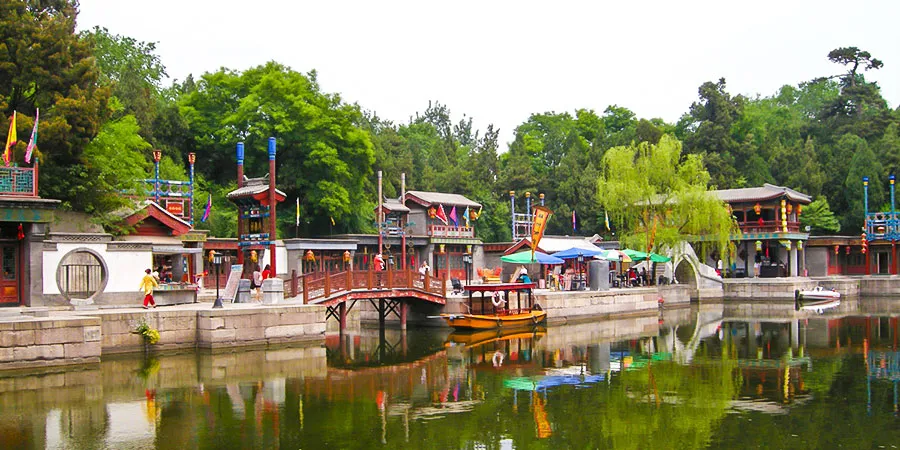
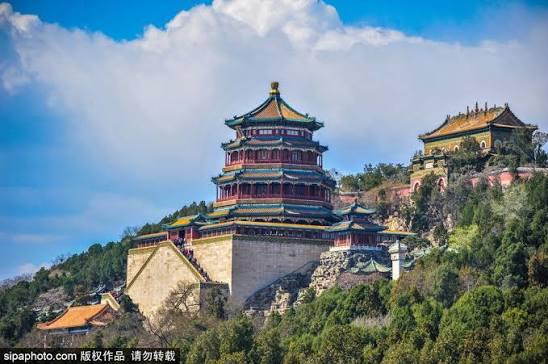
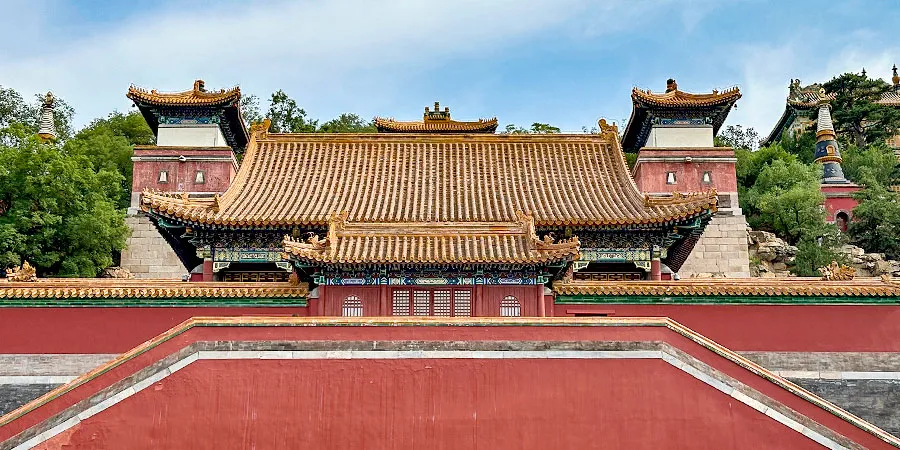
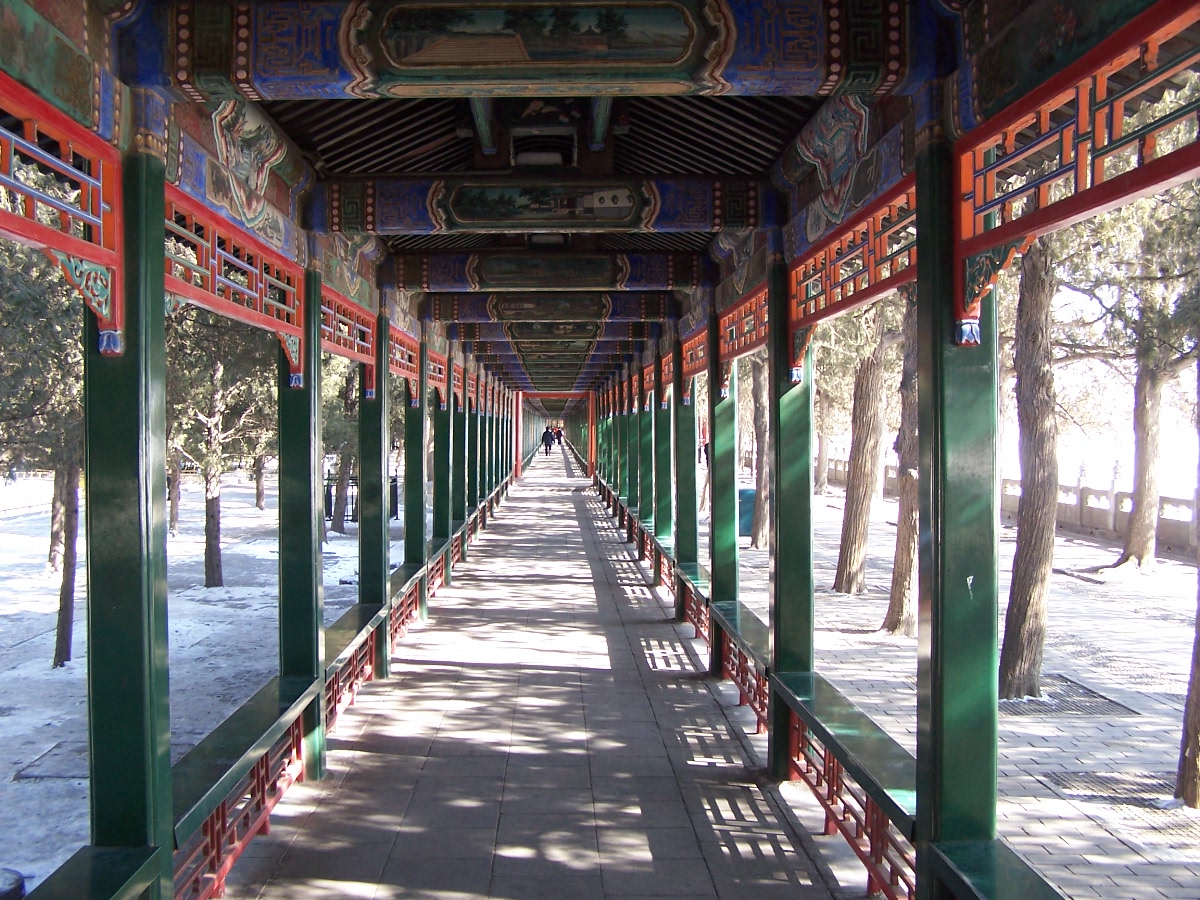
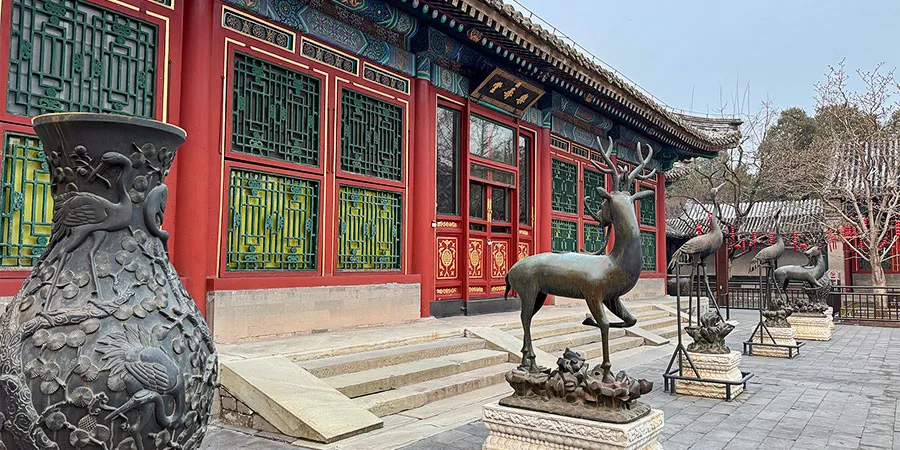
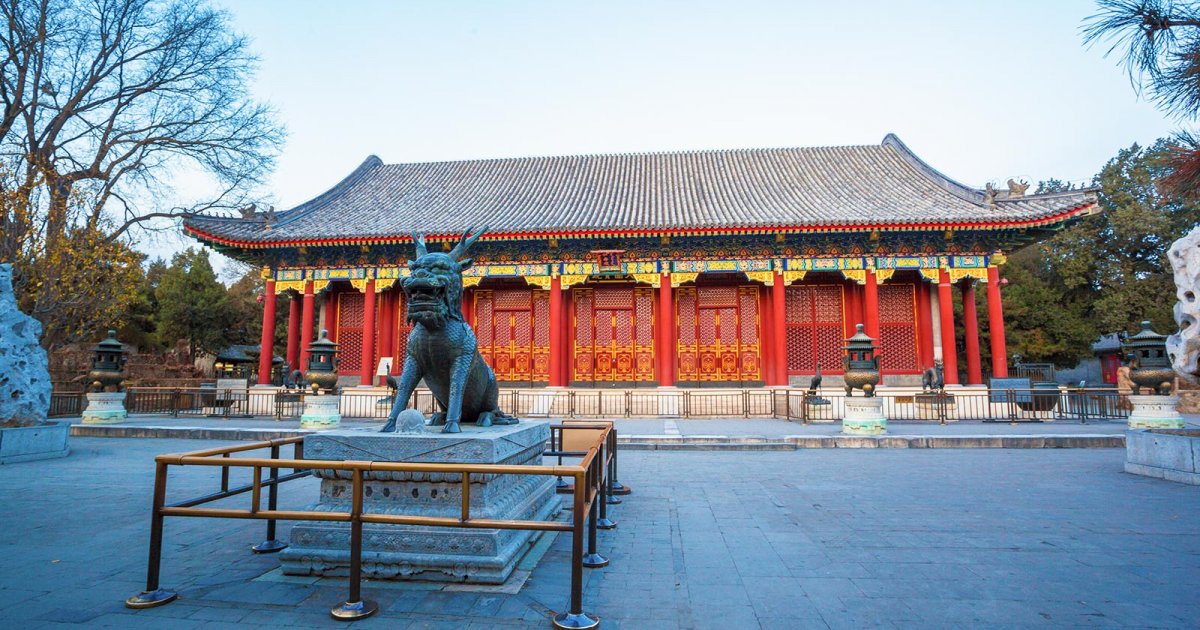
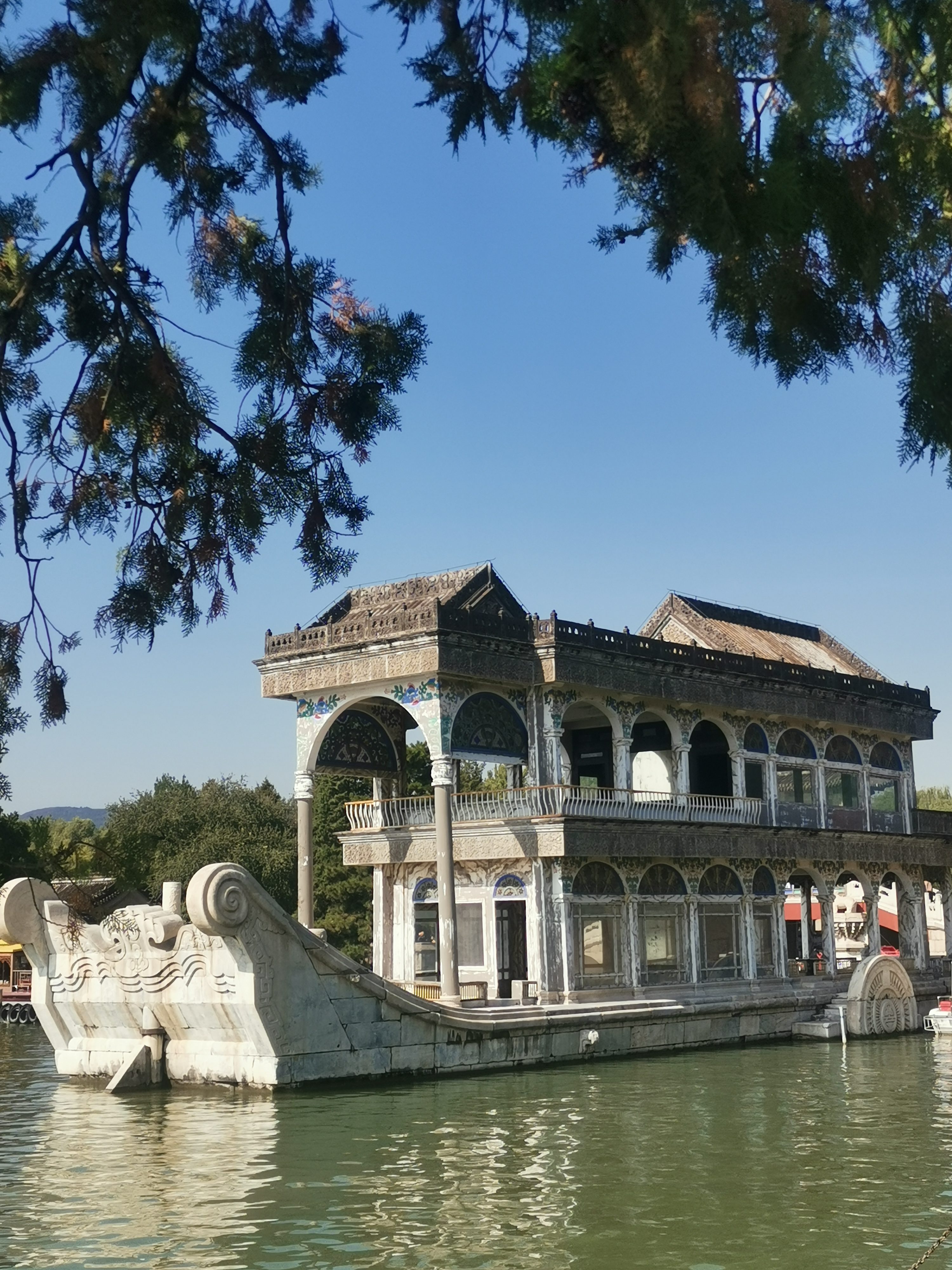
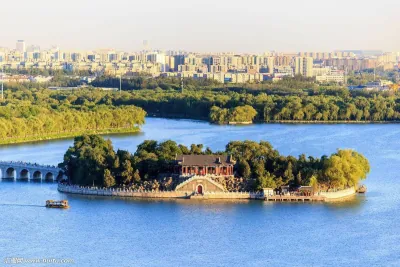
Summer Palace
After half a day of walking, we will go back to the hotel and prepare for our food tour.
Food Tour
Based on a recommendation from a blog somewhere, we chose to do a Hutong Walking Food Tour in Beijing. Basically, we will go with a small group and walk around the Hutongs, which are narrow alleys in Beijing, and try some local food. According to the ad, these are places you would not find on your own. According to the ad we will sample Beijning hotpot, noodles, beef, buns, and spring pancakes, in addition with beers and soda. The tour contains 4 stops.
The tour is not all about food, but also some sightseeings. First of all hutongs are a unique feature of Beijing. They are formed by rows of siheyuan, which are traditional courtyard homes enclosed by walls and square central spaces. Most are over 700 years old. They represent the heart of old community life in Beijing, where residents historically shared public facilities, chatted in open spaces, and walked through tight lanes (some only a meter or less wide). On the way we will see some sights as well, for example we can see the Bell Tower from one of the places. This is a historic tower that houses a large bell and was used to keep time in ancient Beijing.
Day 10
The second day in Beijing we will go to the Great Wall of China. We will leave early in the morning, specificially we meet up at the Regent Hotel at 7:50 to leave at 8:00. I on purpose booked a hotel very close to this hotel, so we can walk there.
Mutianyu Great Wall
The Mutianyu section of the Great Wall is a well-preserved section of the wall, but a bit less crowded than the Badaling section, since it is a bit further away from Beijing. Since Badaling can be way too crowded, we chose this section. In addition, this section has a cable car and a toboggan ride, which is a fun way to go down the wall.
So what to know about the Great Wall of China? The Great Wall of China is a massive series of fortifications stretching over 21,000 kilometers across northern China. Unlike the common misconception, it is not a single continuous wall, but rather a collection of walls and watchtowers built by different dynasties over centuries. The construction of the Great Wall began as early as the 7th century BC, with the most famous sections built during the Ming Dynasty (1368–1644). The total building time is more than 2000 years. The materials used for construction varied depending on the region, including tamped earth, wood, bricks, and stone.
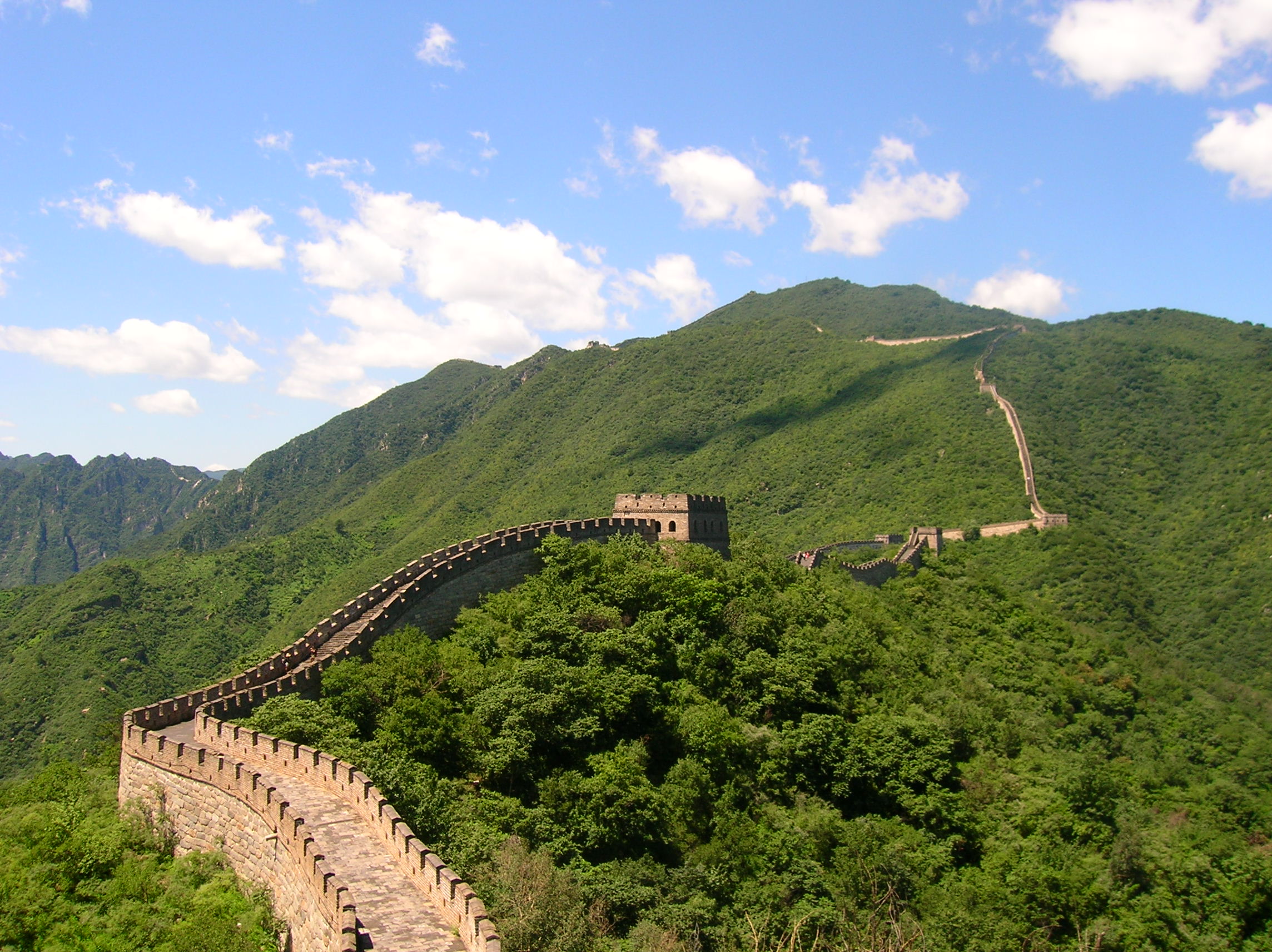
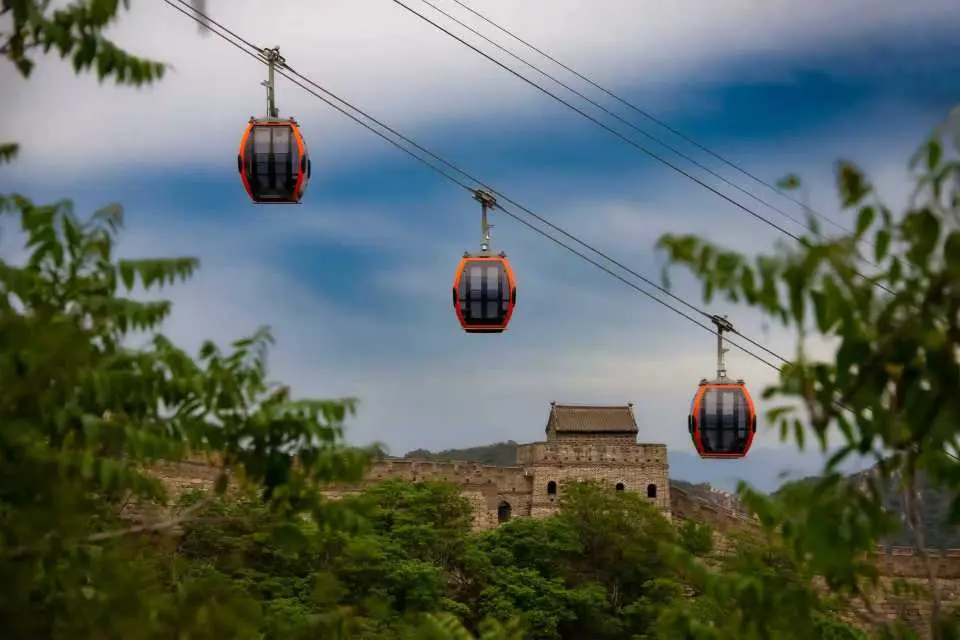
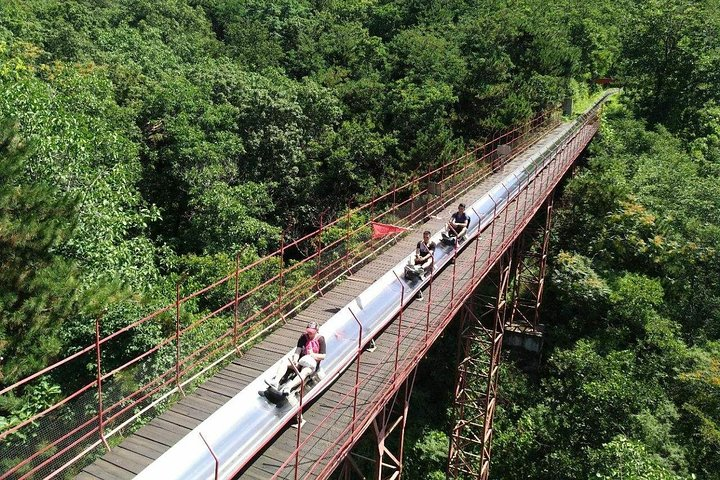
Great Wall of China
Houhai and Shichahai
If we have time after the Great Wall, we will go to Houhai in the Shichahai area. Houhai is an artificial lake, built in the yuan dynasty in the 13th century. The area is surrounded by traditional hutongs and historic architecture. It seems like a relaxing place to end the day with. It also has a lively nightlife scene in the evening.
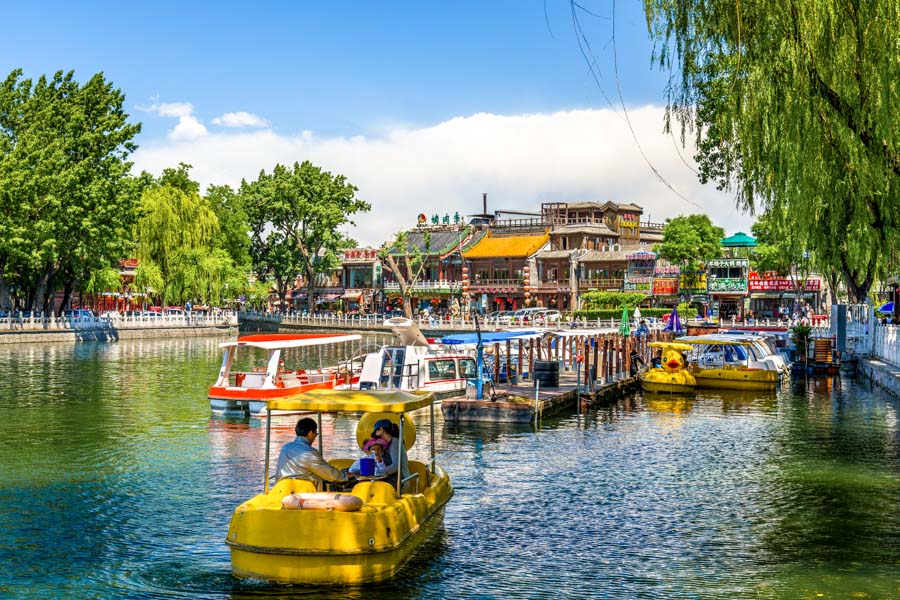
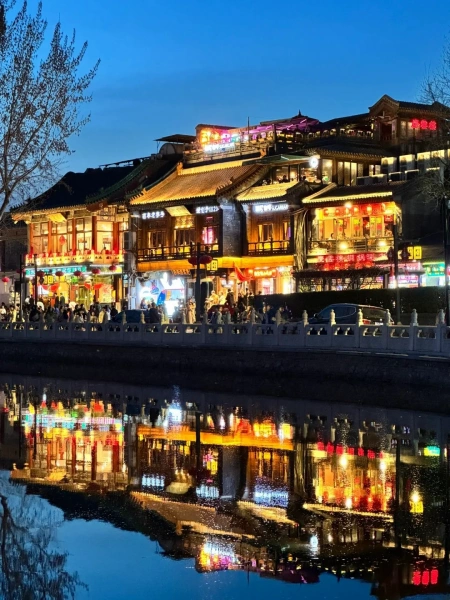
Houhai and Shichahai
Day 11
Day 11 is again packed with activities.
Forbidden City
The Forbidden City is a palace complex in central Beijing, China. It served as the imperial palace and political center of Chinese emperors for almost 500 years, from the Ming dynasty to the end of the Qing dynasty (1420–1912). In total, 24 emperors resided in the Forbidden City until the fall of the monarchy. The complex consists of 980 buildings and covers approximately 180 acres. It is surrounded by a large defensive wall and a moat. The name “Forbidden City” refers to the fact that access to the complex was strictly limited to the imperial family, their court, and select officials. The Forbidden City is split into two main sections: the Outer Court, which was used for ceremonial purposes and state affairs, and the Inner Court, which served as the residence of the emperor and his family. Since 1925, the Forbidden City has been open to the public as the Palace Museum, showcasing a vast collection of Chinese art and historical artifacts. It is recognized as a UNESCO World Heritage Site and is one of the most visited museums in the world.
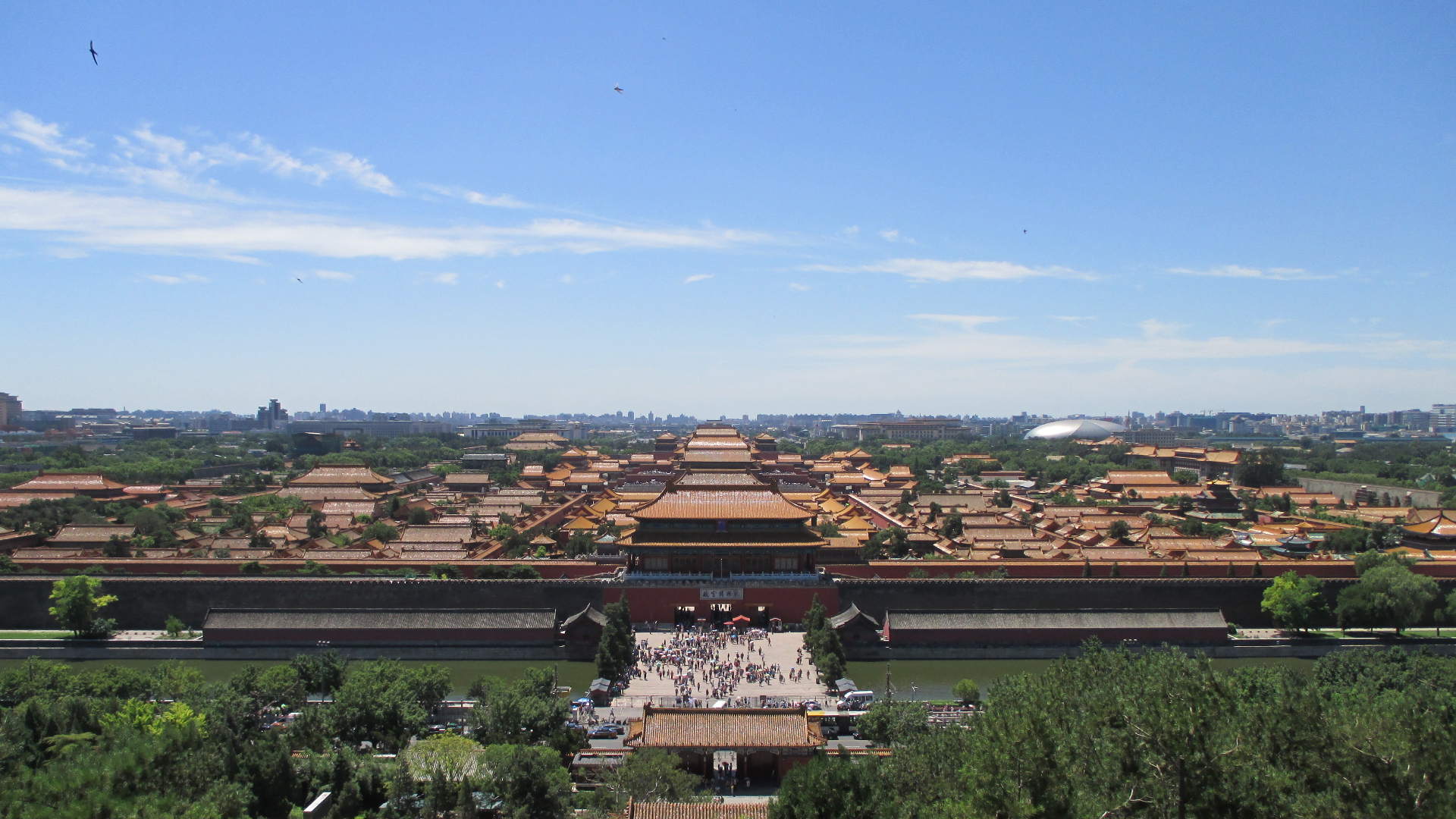
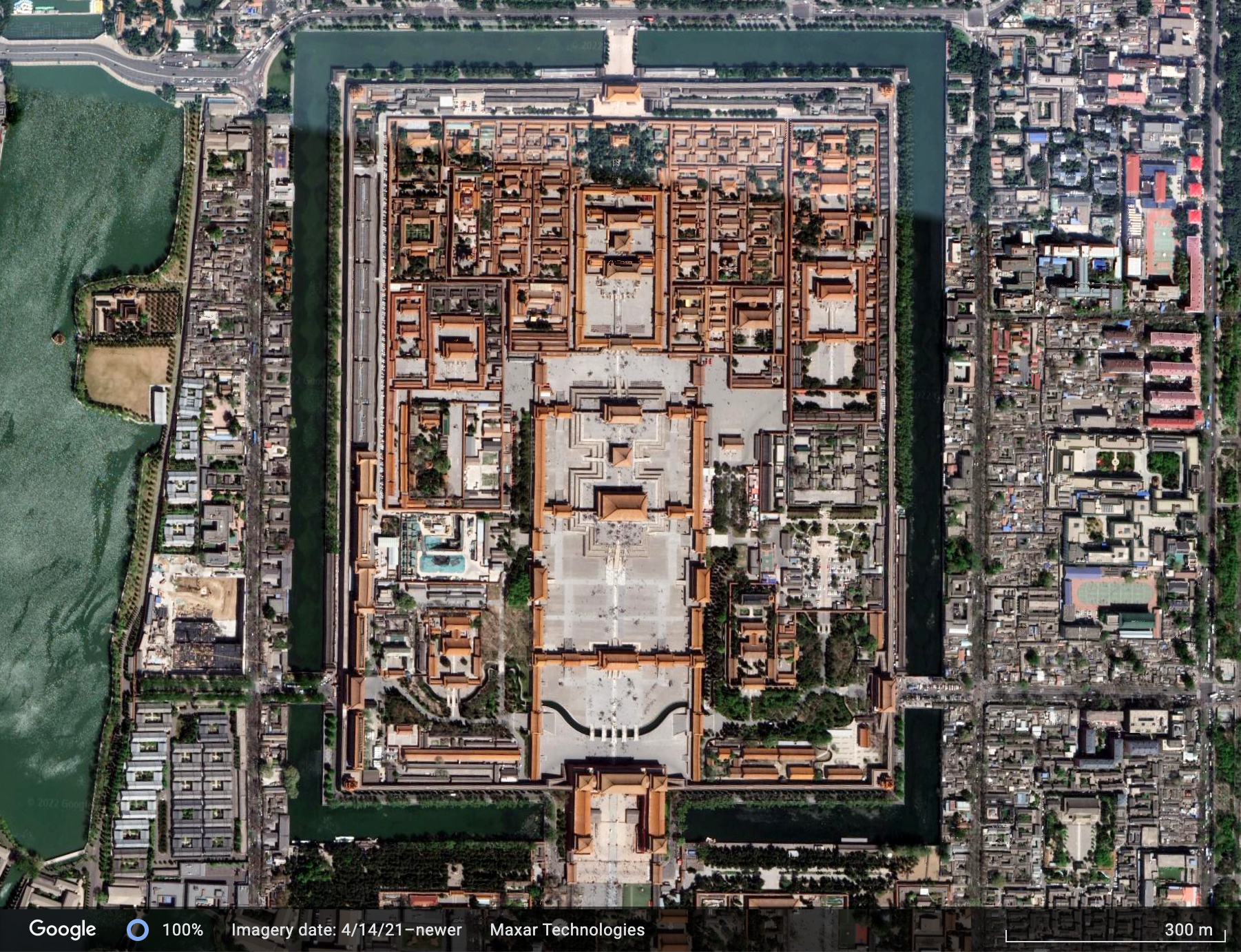
Forbidden City
Imperial Garden
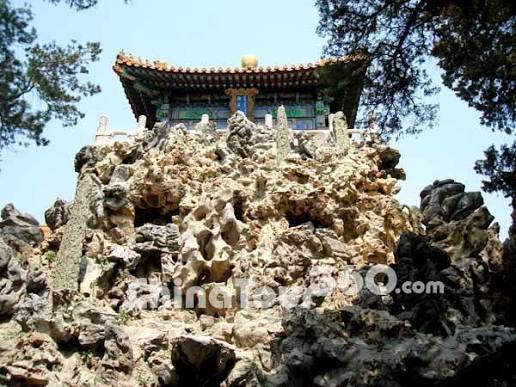
The Imperial Garden in Beijing is a compact, 12,000-square-meter private retreat located at the northernmost end of the Forbidden City. The garden was built in 1417 during the Ming Dynasty, and contains roughly 20 structures, including rockeries, ponds, flower beds, and ancient trees. It also features multiple pavilions and halls.
The key highlights are:
- Hall of Imperial Peace, The central 15th-century Taoist shrine dedicated to the water god, guarded by gilded unicorns and flanked by a 400-year-old “Consort Pine”.
- Pavilion of Myriad Springs (Wanchunting): Built in 1535 in the eastern corner, featuring intricate multi-layered eaves symbolizing spring.
- Gathering Beauty Hill (Duixiushan): An artificial rockery pile with caves and a top pavilion (Pavilion of Imperial View) where emperors climbed during the Double Ninth Festival.
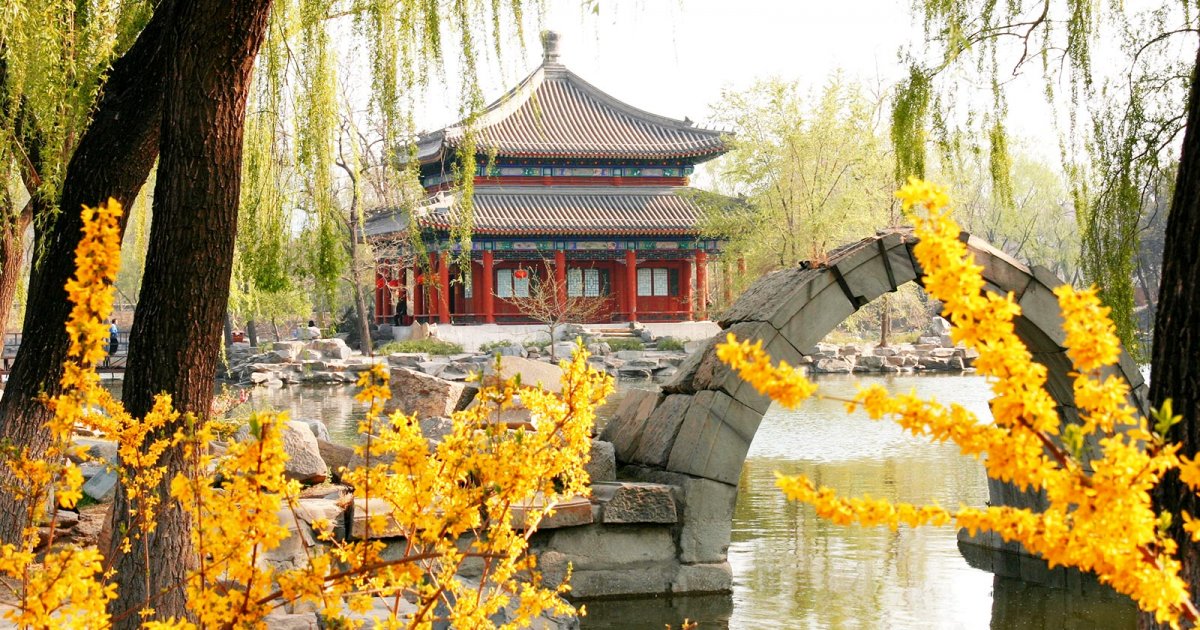
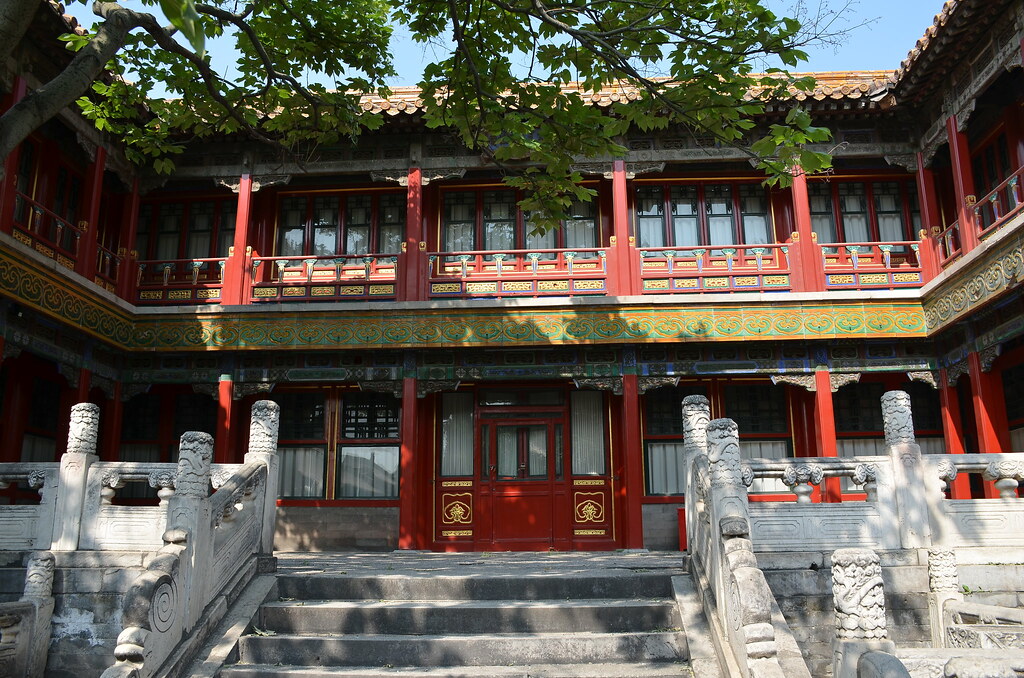
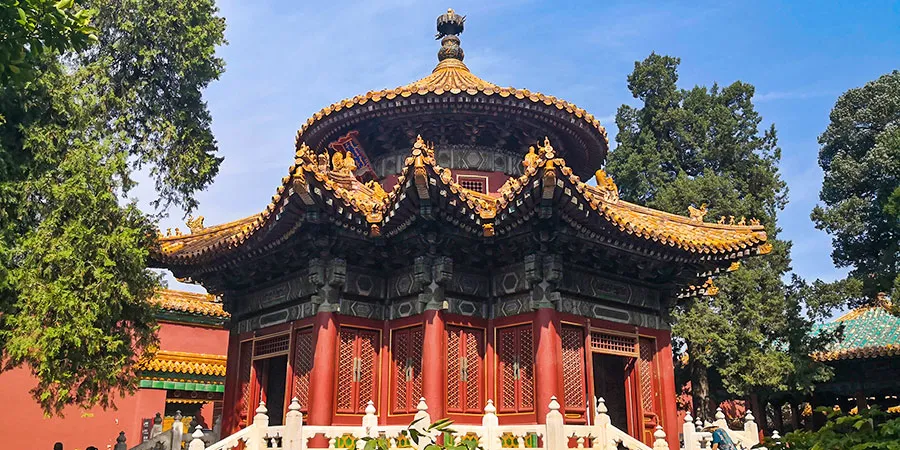
Imperial Garden
Jingshan Park
Jingshan Park is a 23-hectare (57-acre) historic imperial park located in Xicheng District, Beijing, China, directly north of the Forbidden City.
It offers a panoramic view of the Forbidden City.
The park opened to the public in 1928, and became an official public park in 1949.
There are multiple things to explore.
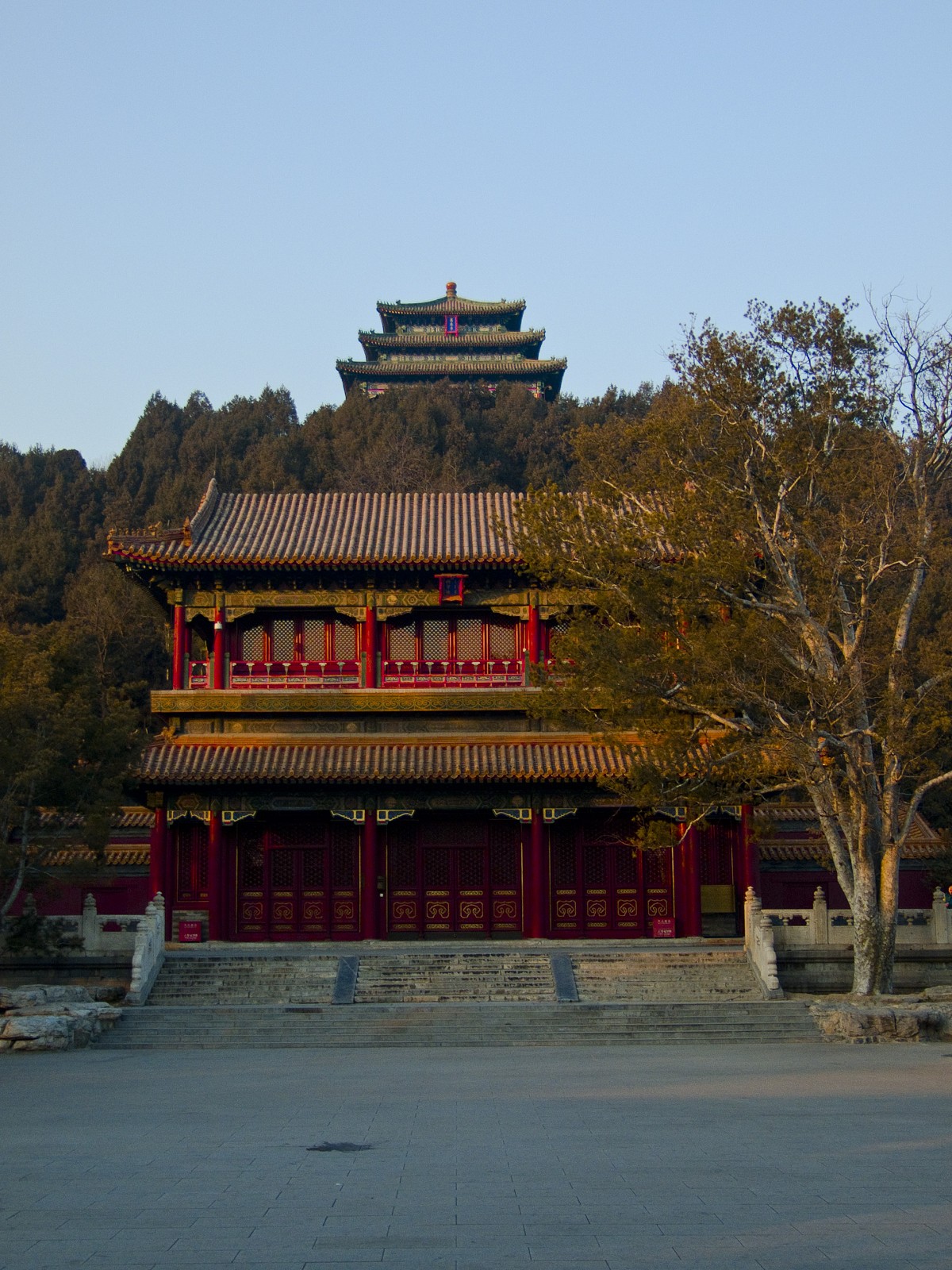
- Prospect Hill (Coal Hill): At the center of the park rises Jingshan Hill, a 45.7-meter (150-foot) artificial hill. It was built during the Ming dynasty using soil excavated from the palace moats.
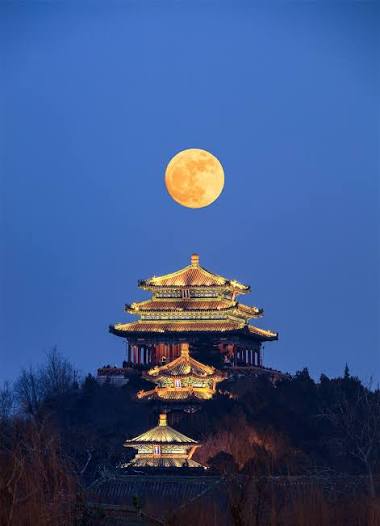
- Wanchun Pavilion: Located at the highest peak of the hill, this pavilion sits on Beijing’s historic central axis and offers an iconic, panoramic bird’s-eye view of the Forbidden City’s golden roofs and red walls.
- Imperial History: Originally used as a private royal garden and Feng Shui shield to protect the imperial palace from evil spirits, it also served as an archery and riding ground for the imperial family. The last Ming emperor, Chongzhen, hanged himself on the eastern side of the hill in 1644.
- Gardens: The park features walking paths, ancient trees, and a large peony garden that blooms in the spring.
Jingshan Park
Beihai Park
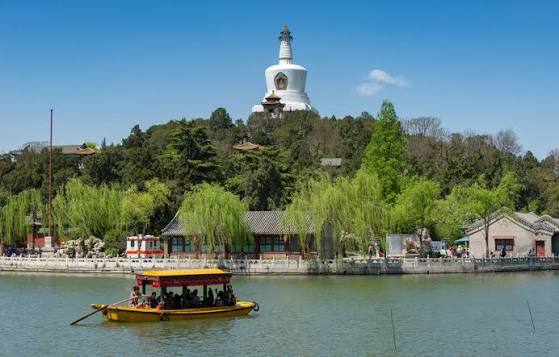
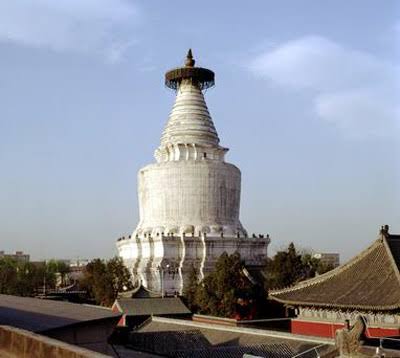
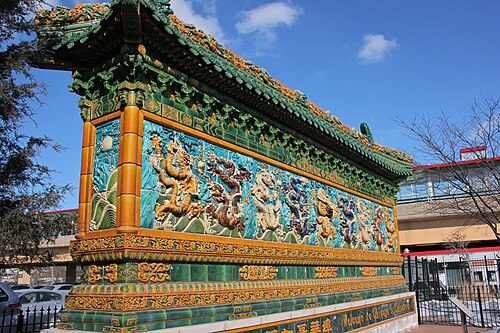
Beihai Park is one of the oldest, largest, and best-preserved ancient imperial gardens in China, located in the center of Beijing just northwest of the Forbidden City. First built in the 10th century during the Liao Dynasty, the grounds were subsequently expanded and used as a royal retreat and winter palace by emperors across the Jin, Yuan, Ming, and Qing dynasties. Once a restricted part of the Imperial City, it was opened as a public park in 1925. The park covers 69 hectares (170 acres), over half of which is taken up by Beihai Lake. Its design follows classical Chinese gardening rules (“one lake and three hills”) and imitates famous scenic spots from various regions across China. The key highlights are:
- The White Dagoba: A 35.9-meter-tall, Tibetan-style stupa crowning the top of Jade Flower Islet (Qionghua Island) in the center of the lake. Built in 1651, it serves as the park’s most famous landmark.
- Nine-Dragon Screen: A 27-meter-long decorative wall made of 424 seven-colored glazed tiles, featuring coiling dragons on both sides.
- Circular City (Tuancheng): A walled area near the southern gate housing historical artifacts, including a Yuan Dynasty jade wine cup and a white jade Buddha.
- Boating and Local Life: The lake is popular for paddleboats and electric dragon boats, while locals frequently gather under the willows to practice tai chi, sing, and play folk music.
Beihai Park
Wang Fu Jing Da Jie
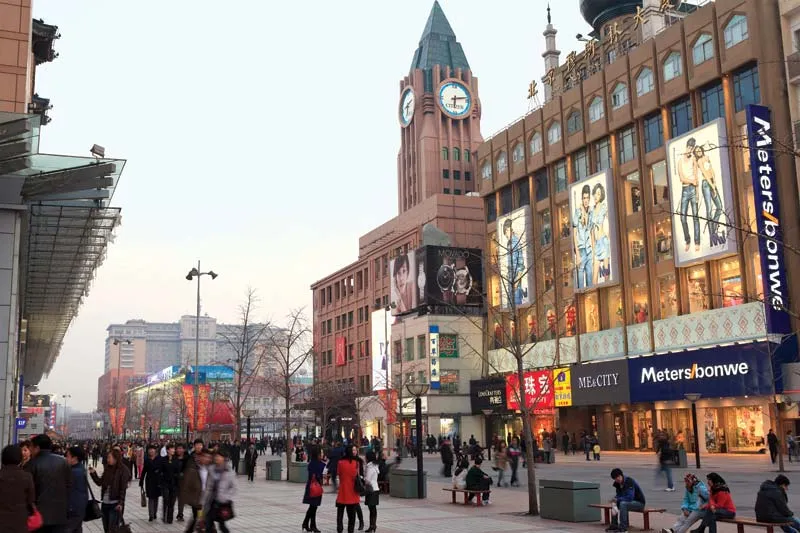
Wangfujing Dajie is a famous, bustling pedestrian shopping street located in the Dongcheng District of Beijing, China. Wangfu means “Prince’s Mansion” (referring to the royal estates built here during the Ming and Qing dynasties), and Jing means “Well” (referring to a sweet-water well once found in the area). Pedestrian Zone: It was transformed into a pedestrian-only zone in 1999 (banning regular car traffic) and serves as one of Beijing’s premier commercial centers. Inside this area, there is something called a Golden Street and a mall. We will just walk around and see what we can find.
Wang Fu Jing Da Jie
Day 12
This is our last full day in Beijing. We will visit the last mandatory sites, before going to Tokyo!
Temple of Heaven
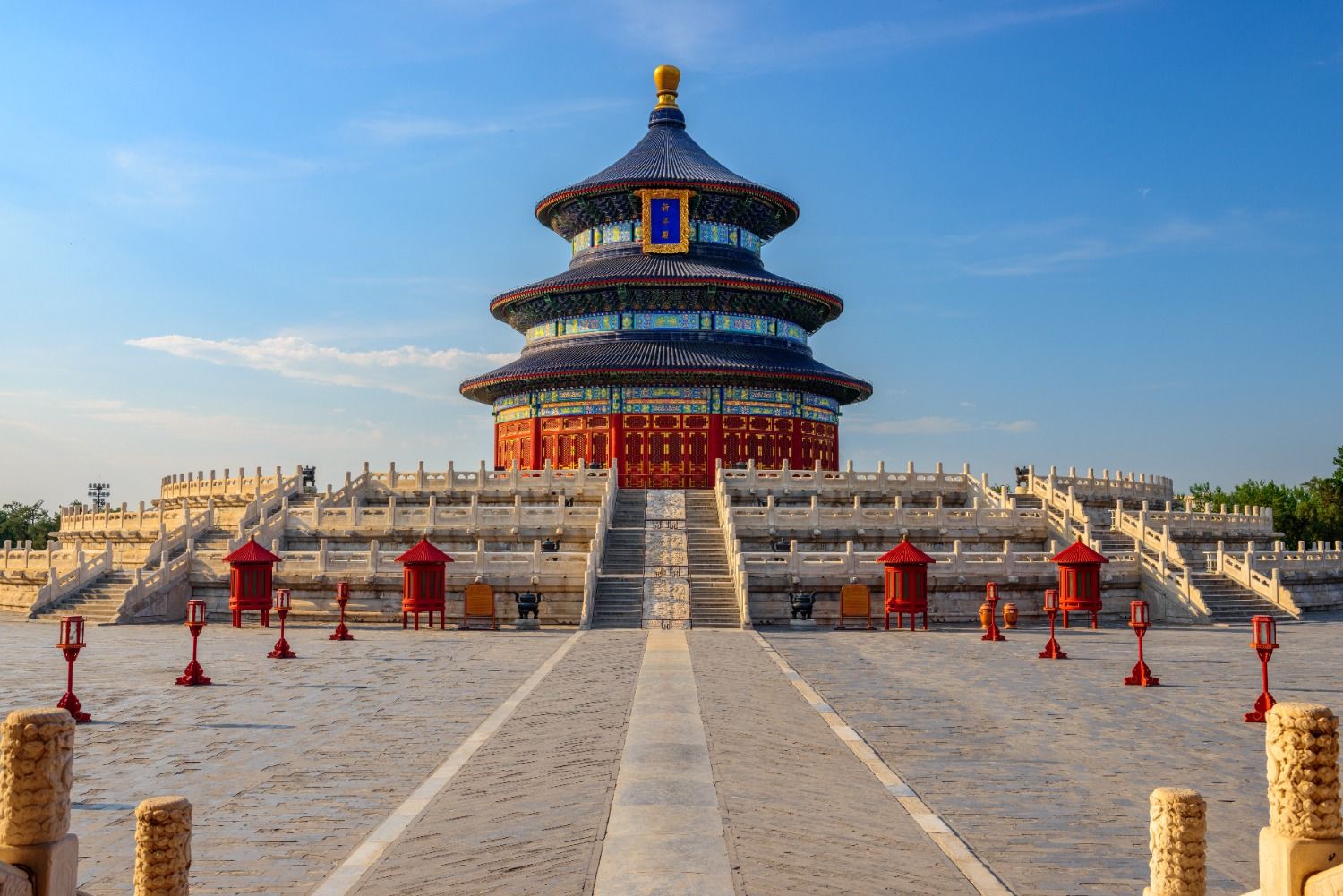
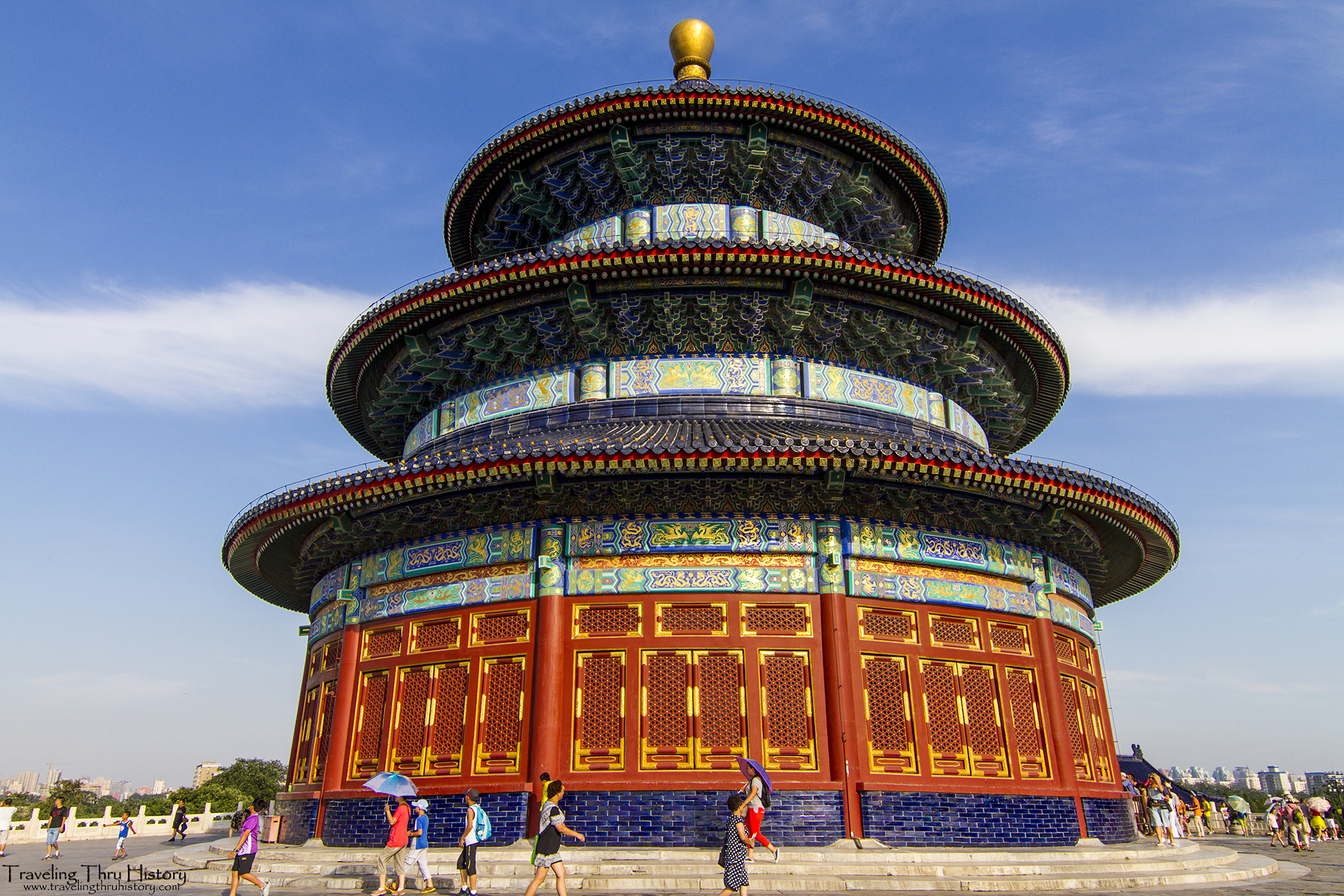
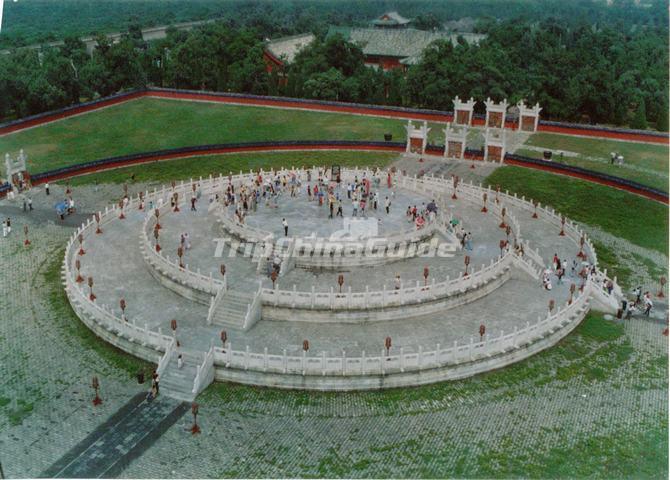
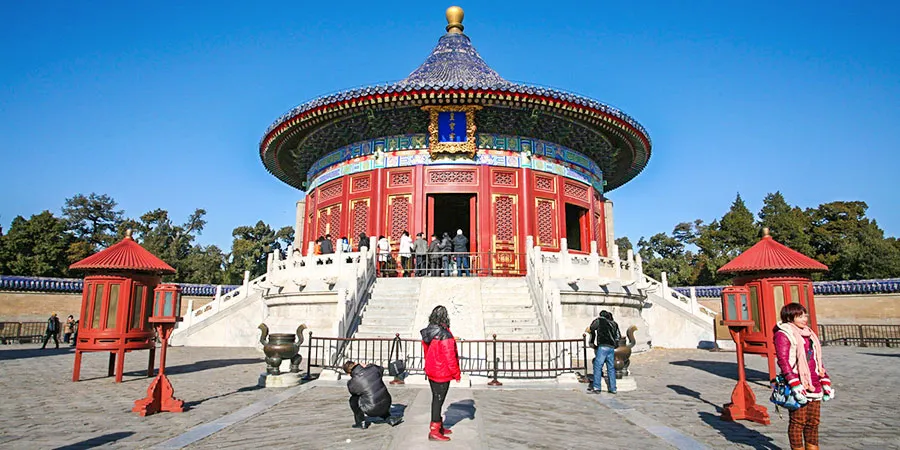
The Temple of Heaven is a historic imperial sacrificial complex and public park in southeastern Beijing, China, built between 1406 and 1420 during the Ming Dynasty under the Yongle Emperor. Used by Ming and Qing dynasty emperors—who were considered the “Son of Heaven”—to offer annual solemn prayers and sacrifices to Heaven for good harvests and national prosperity. Based on ancient Chinese cosmology (“Round Heaven, Square Earth”), the northern section of the compound is rounded to symbolize the sky, while the southern section is square to represent the earth. Spanning 273 hectares (2.73 square miles), the complex is nearly four times larger than the Forbidden City, showing the emperor’s ritual humility before the divine. Converted into a public park in 1918, where local residents gather daily for tai chi, folk singing, sword dancing, and playing chess.
Major highlights include:
- Hall of Prayer for Good Harvests: A triple-gabled circular wooden hall built on a three-tiered marble terrace, where emperors prayed for bountiful harvests. It is the most iconic structure in the complex and a UNESCO World Heritage Site. It is A towering, triple-gabled circular wooden building constructed entirely without nails using traditional interlocking joinery.
- Circular Mound Altar: An open-air, three-tiered white marble platform where emperors performed winter solstice sacrifices.
- Imperial Vault of Heaven: A smaller circular hall with a single gabled roof, surrounded by the Echo Wall, which carries sound across the courtyard. It houses ceremonial tablets and is used for smaller rituals.
Temple of Heaven
Da Shi Lan Jie
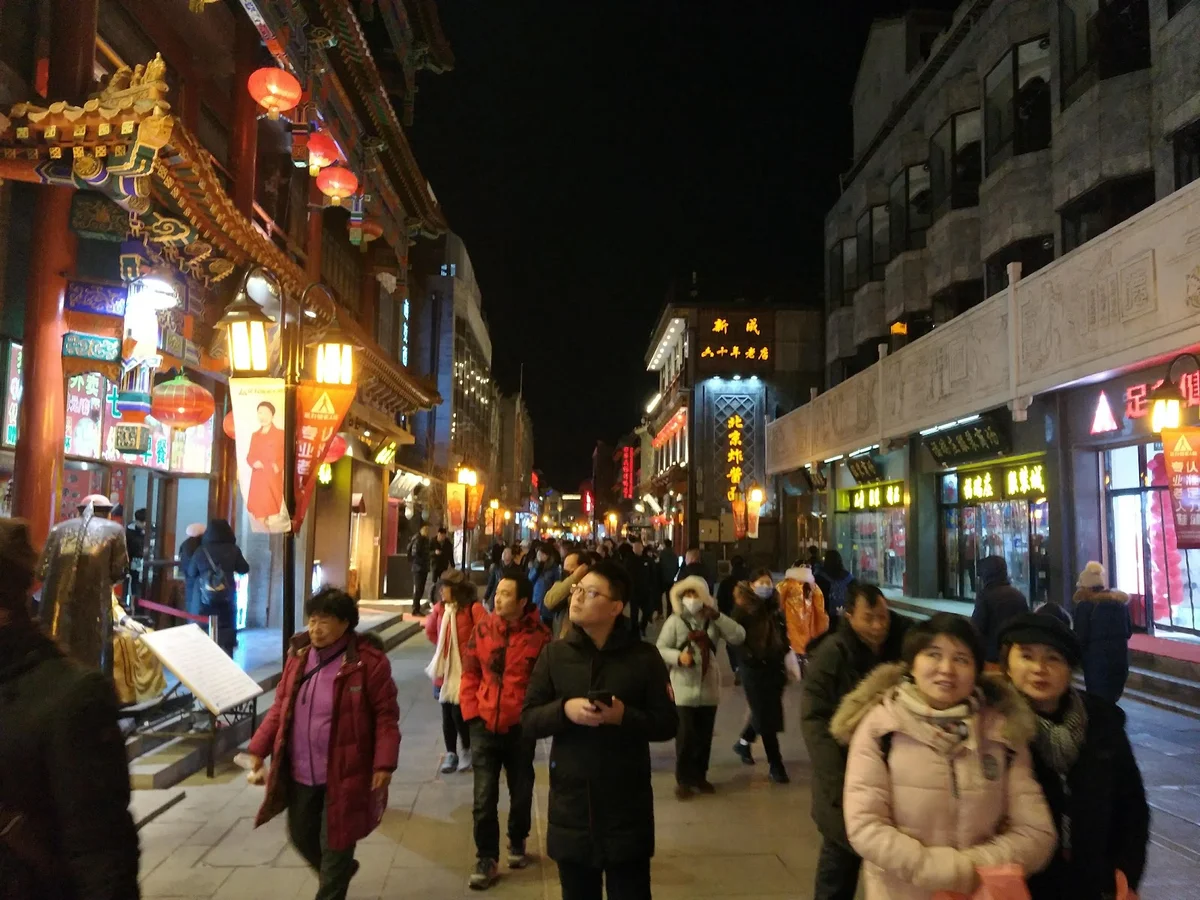
historische en levendige winkelstraat van meer dan 500 jaar oud, gelegen in het Xicheng-district van Beijing, vlak bij het Tiananmen-plein. We will go eat here before going to the National Museum of China and Tiananmen Square, which is located near this place.
Da Shi Lan Jie
National Museum of China
After lunch, if we manage to get tickets, we will go to the National Museum of China. The National Museum of China is a comprehensive museum located on the eastern side of Tiananmen Square in Beijing, China. It was established in 2003 through the merger of the Museum of the Chinese Revolution and the National Museum of Chinese History. The museum’s mission is to educate the public about China’s history, culture, and art, while also promoting national pride and cultural heritage. The museum’s collection spans over 1.4 million artifacts, including ancient ceramics, bronzes, paintings, calligraphy, and so much more spanning over 5000 years of Chinese history. It is completely massive, so we probably have no time to see everything, but this is a must see museum when in Beijing.
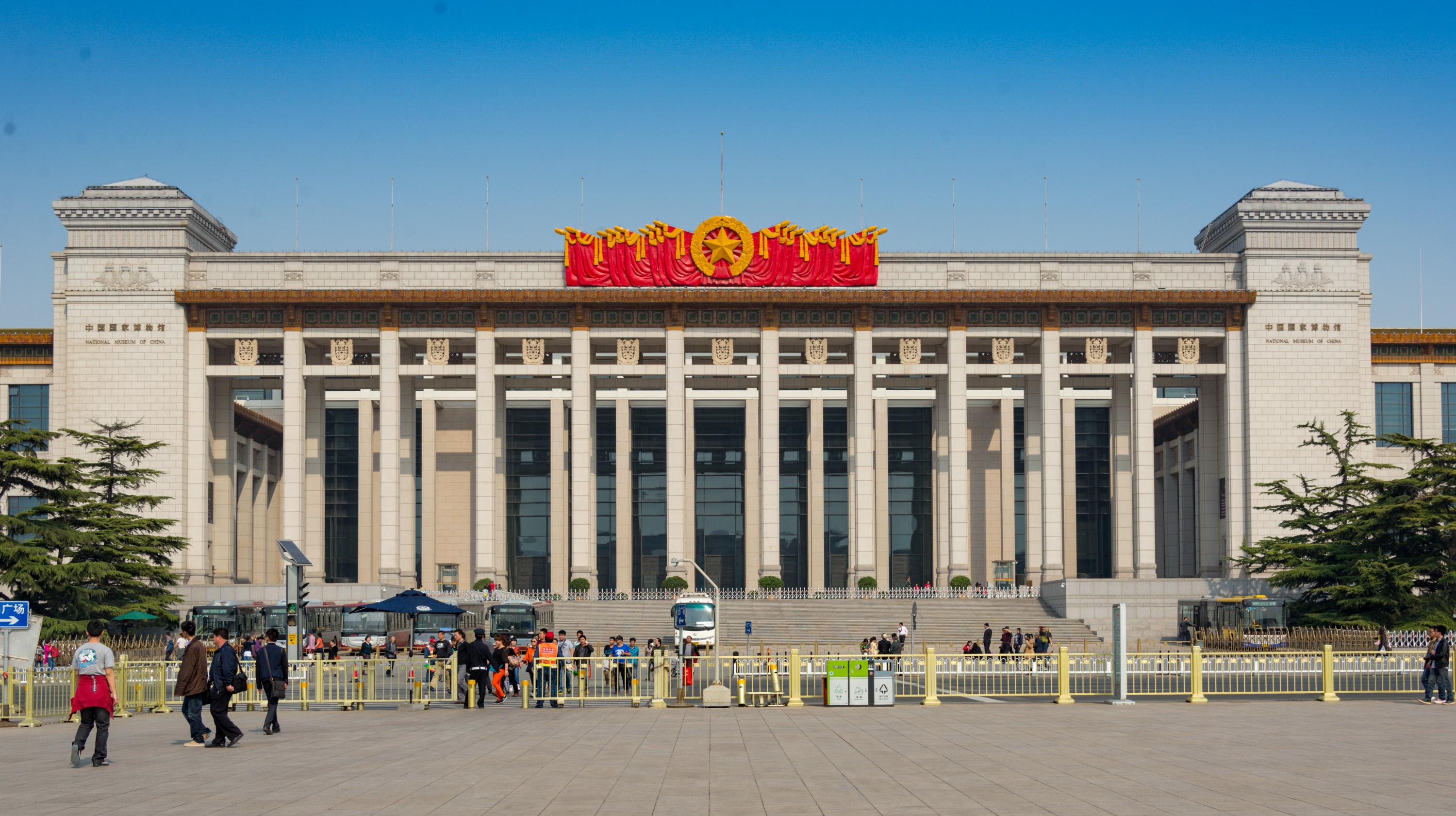
National Museum of China
Tiananmen Square
According to some sources, when leaving the National Museum of China, we will be right in front of Tiananmen Square. Tiananmen Square is a large city square in the center of Beijing, China, named after the Tiananmen (“Gate of Heavenly Peace”) located to its north, which separates it from the Forbidden City. The square covers an area of 109 acres (44 hectares) and is one of the largest public squares in the world. It has great cultural significance and is often used for national ceremonies, parades, and public gatherings. The square is surrounded by several important buildings, including the Great Hall of the People, the National Museum of China, and the Monument to the People’s Heroes. Also it is known for the protests that took place there in 1989, which were part of a pro-democracy movement that was ultimately suppressed by the Chinese government. You normally need a ticket to enter, so we hope that the national museum is indeed somewhat of a ticket.
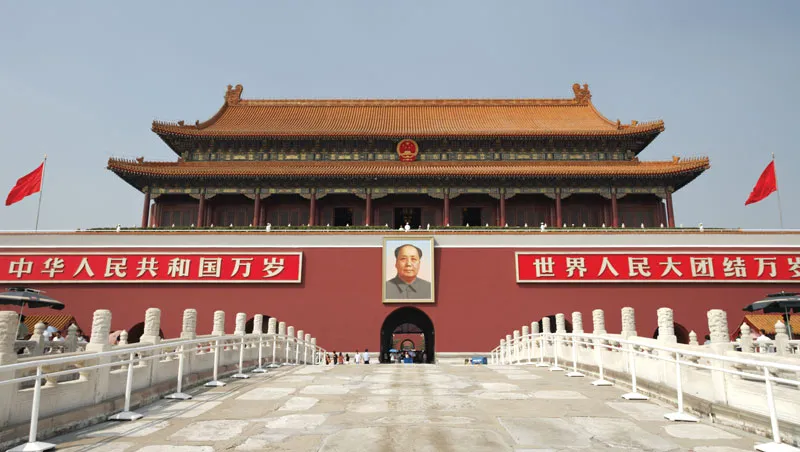
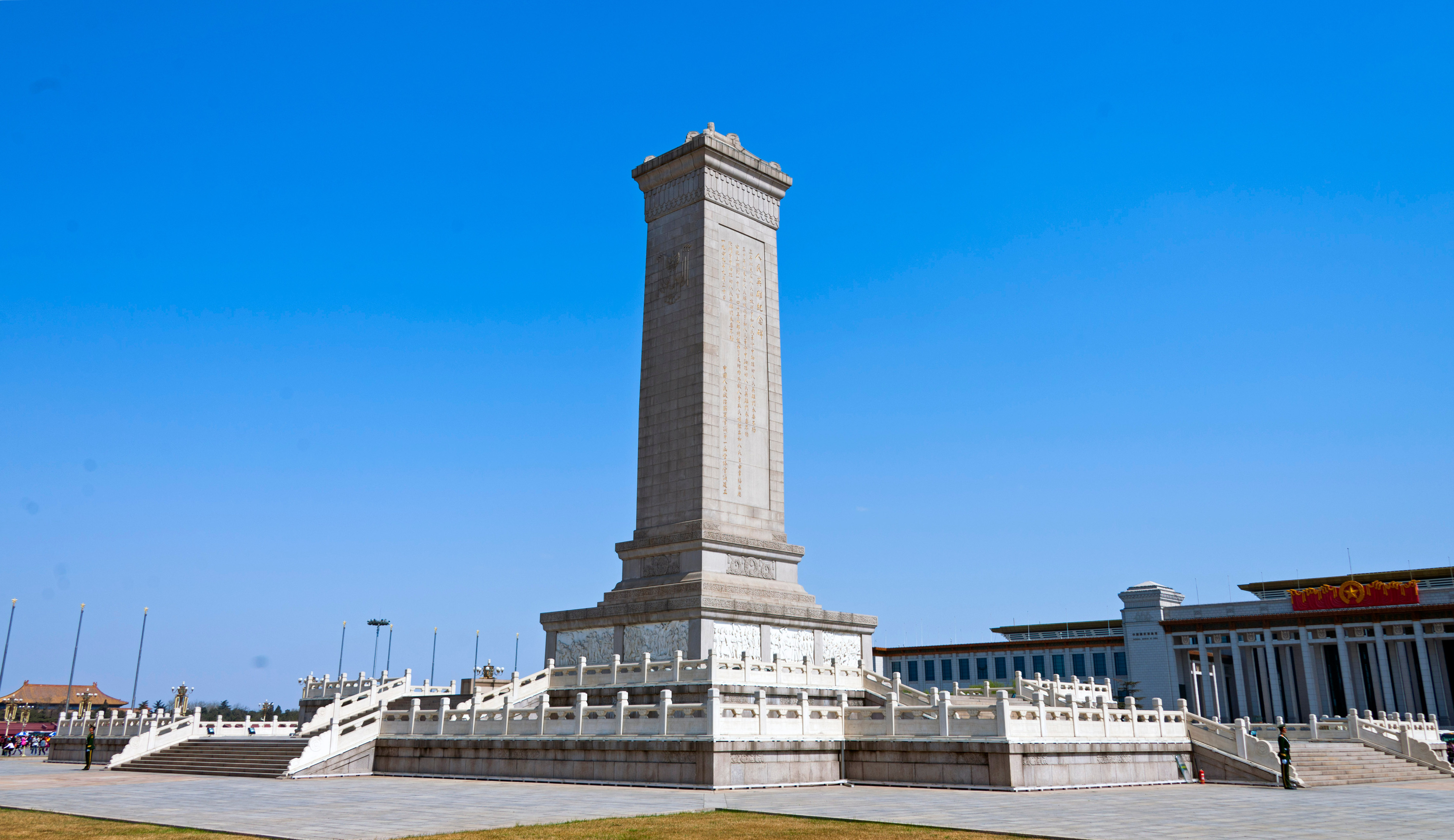
Tiananmen Square
Day 13
After eating breakfast in the hotel, we will immediately go to the airport and take a flight to Tokyo.