Suspension Bridge
We booked our tour together with a stop at the Red Suspension Bridge which is located closely to the DMZ. If I understood it correctly, it was specifically made for tourists of the DMZ, which is quite bizarre. The Suspension Bridge is 150 meter long and offers a panoramic view of the surrounding mountains. The view is good, not the most amazing view ever, but the experience is fun, and I would definitely recommend booking the DMZ together with the bridge. To reach the bridge you have to climb a small hill. However, on our way back a guy slipped. The fall didn’t look bad at all, but he was in a lot of pain, and we think he might have broken his ankle. This happened right in front of us and was terrible to experience… I hope he is doing better now, and that it did not ruin his whole trip.
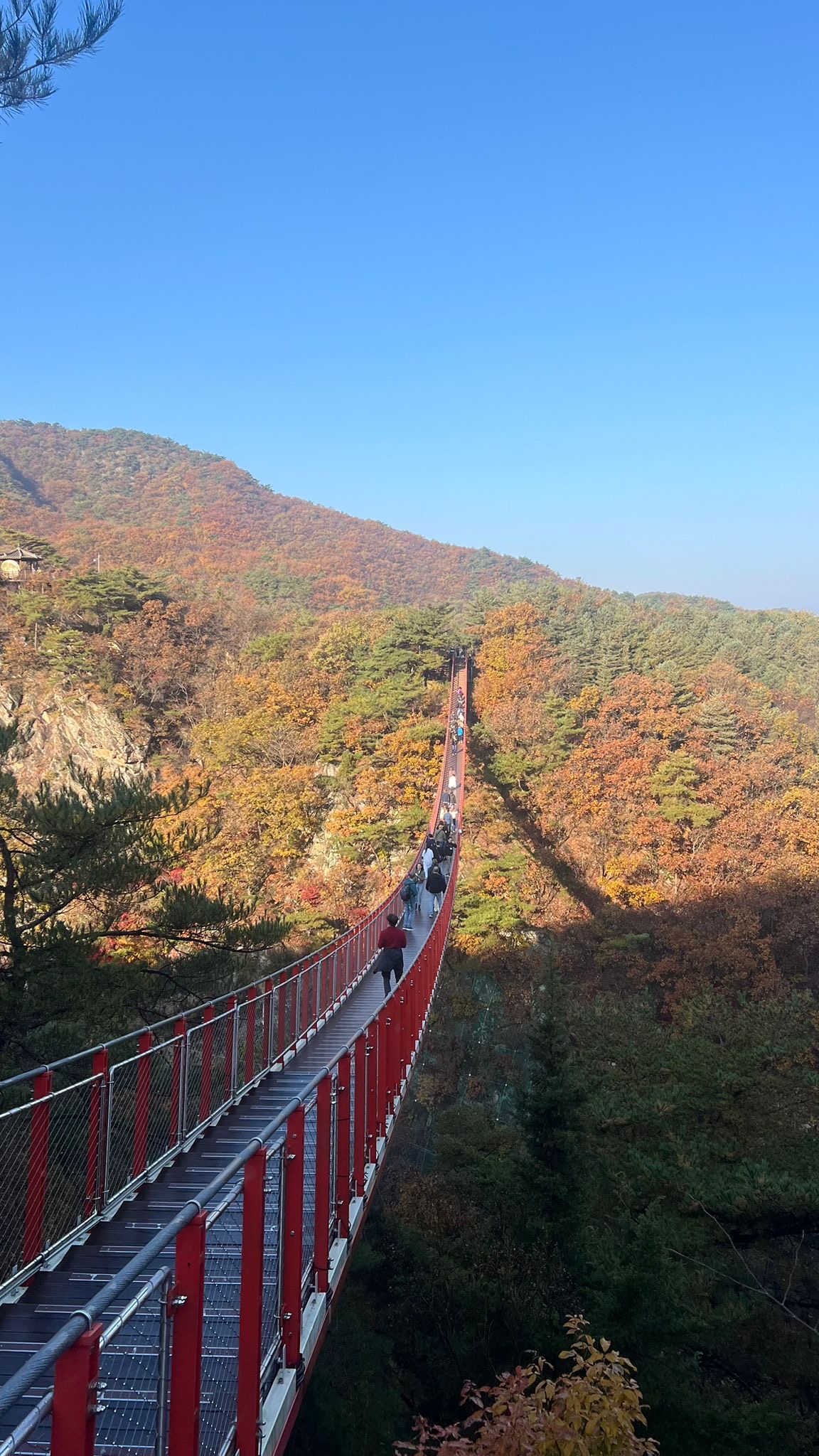
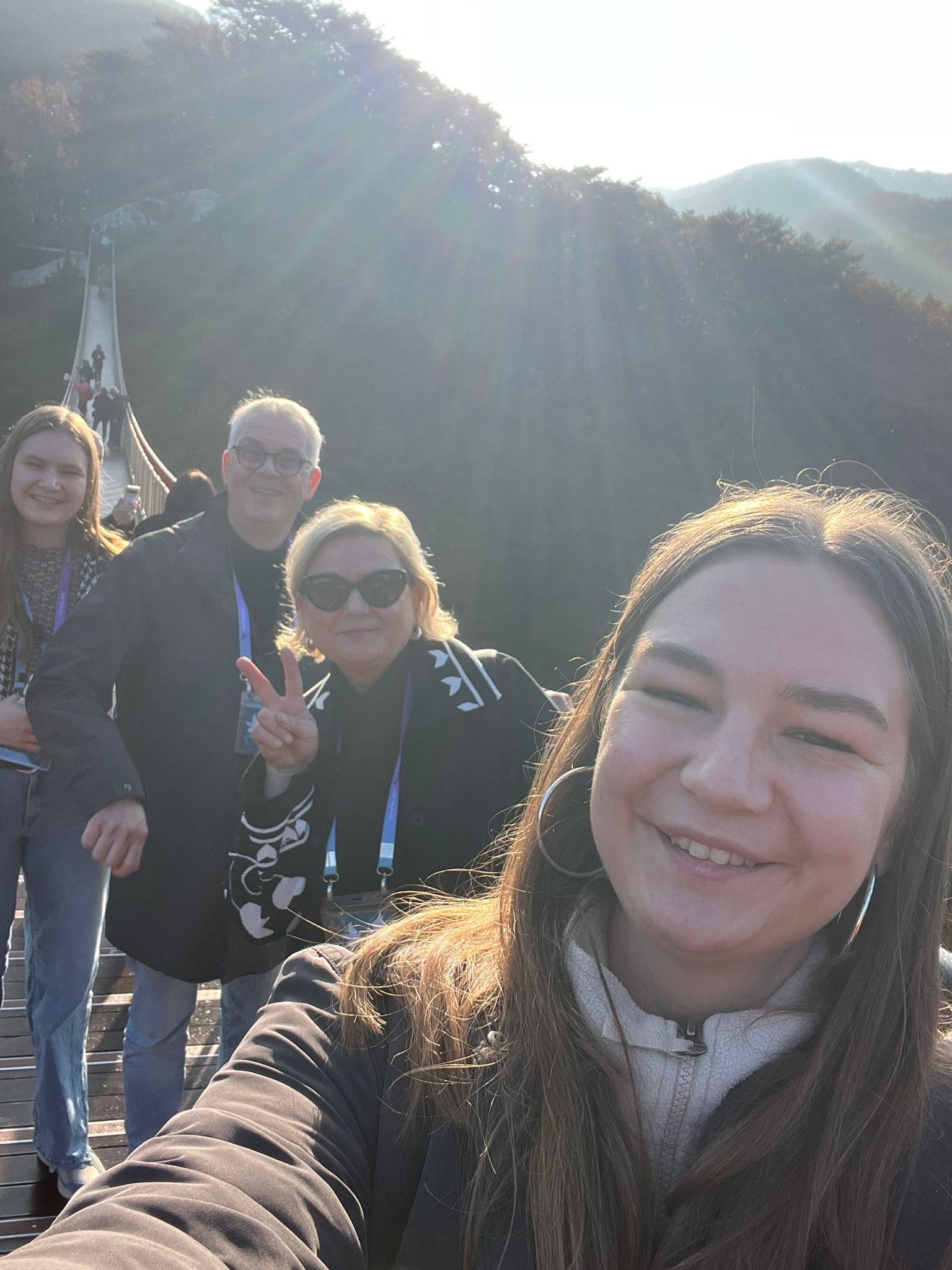
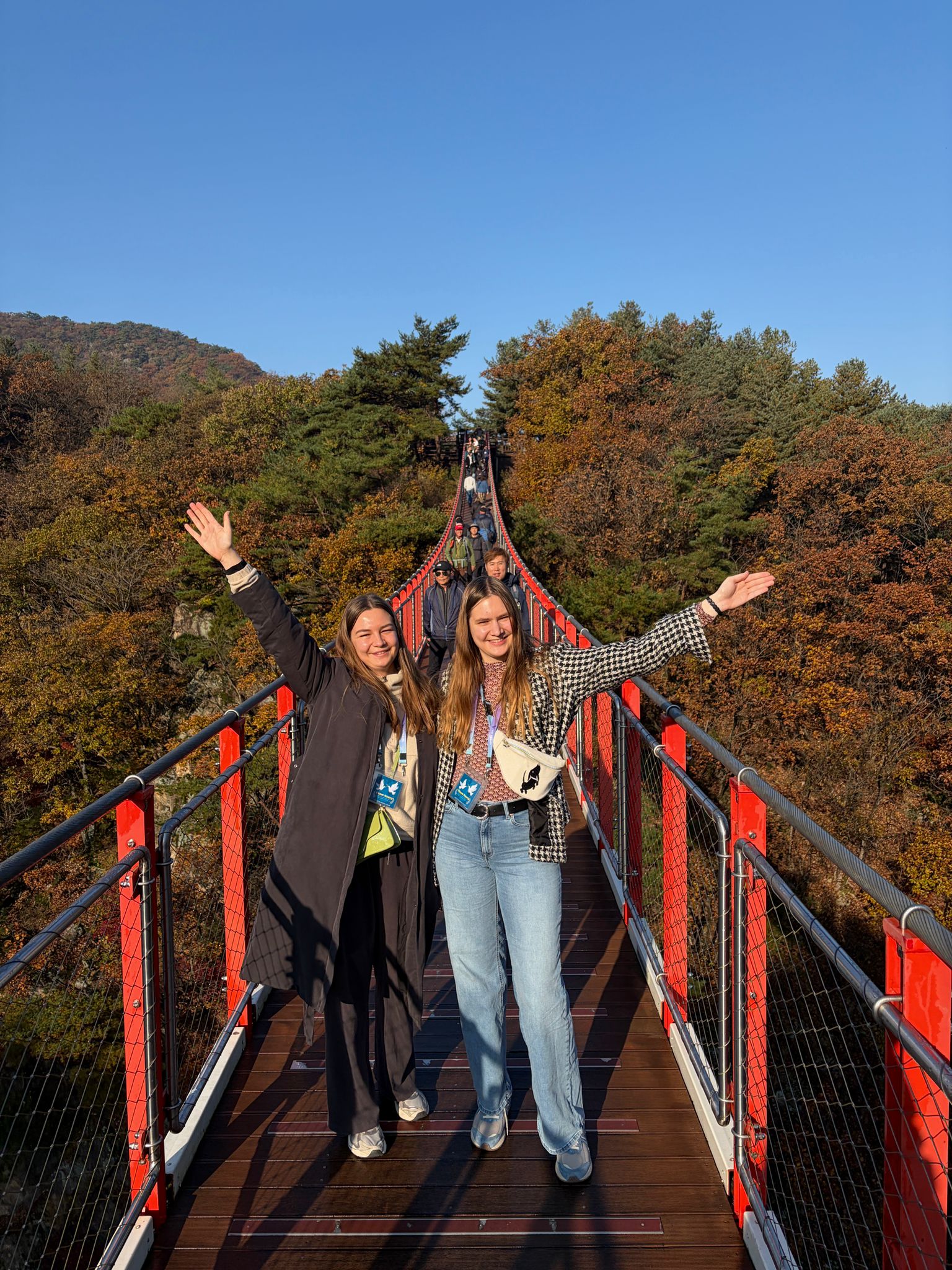
Red Suspension Bridge
DMZ
Imjingak Park
The first stop of the actual DMZ (or the almost DMZ, we never really enter the DMZ itself) was Imjingak Park. This park is closely located to the DMZ/border to North Korea and is thus used a lot by the older generation of people to give food and bow for their relatives living on the other side. They often go with the whole family, but since the younger generation is not as connected with North Korea, a theme park was built next to the park. This way, the children could enjoy themselves while the older people paid their respects. This tradition happens almost every weekend for some families according to our tour guide (she was amazing btw), #Team Nancy.
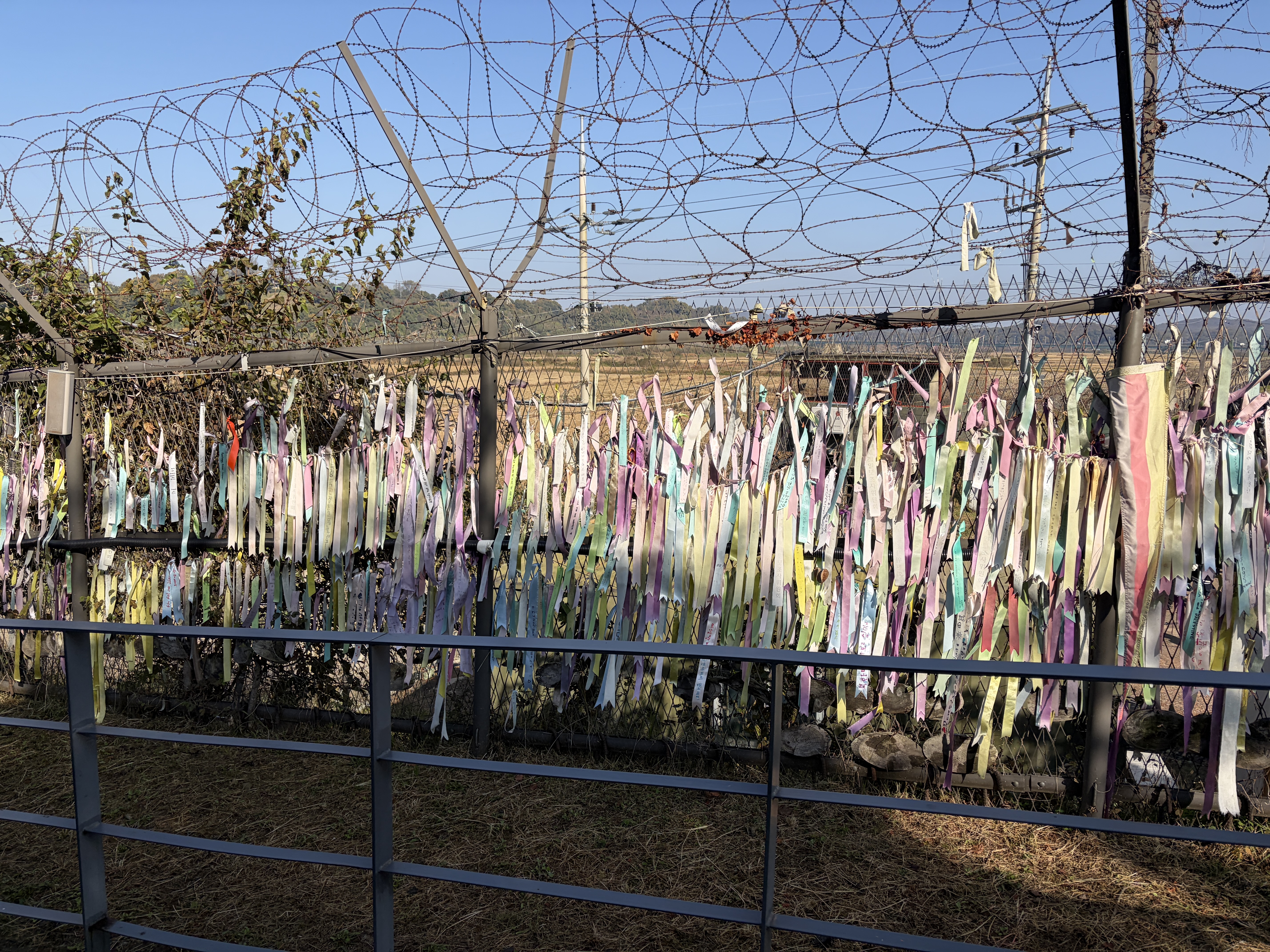
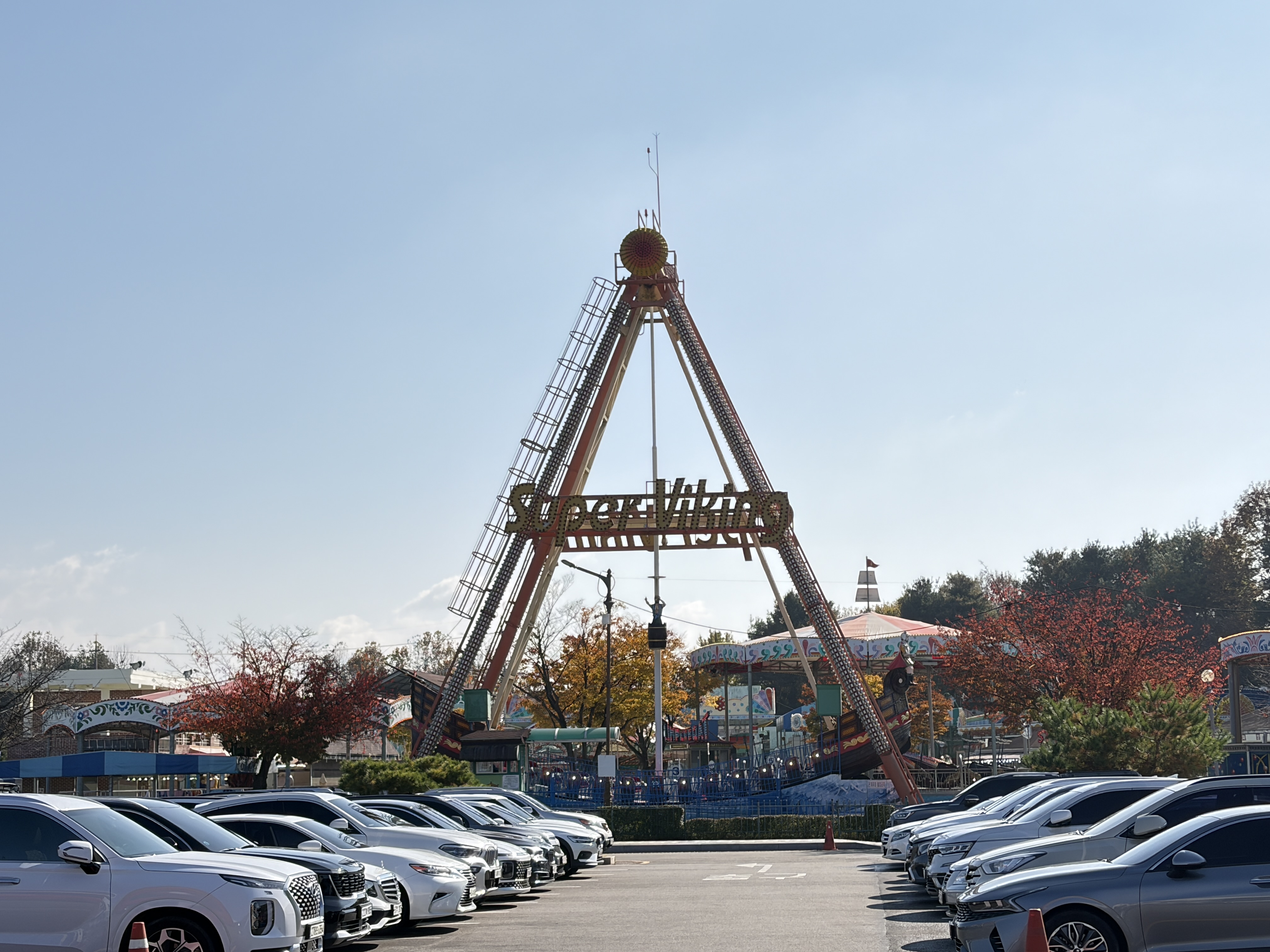
Ribbons with messages for northern relatives in Imjingak Park
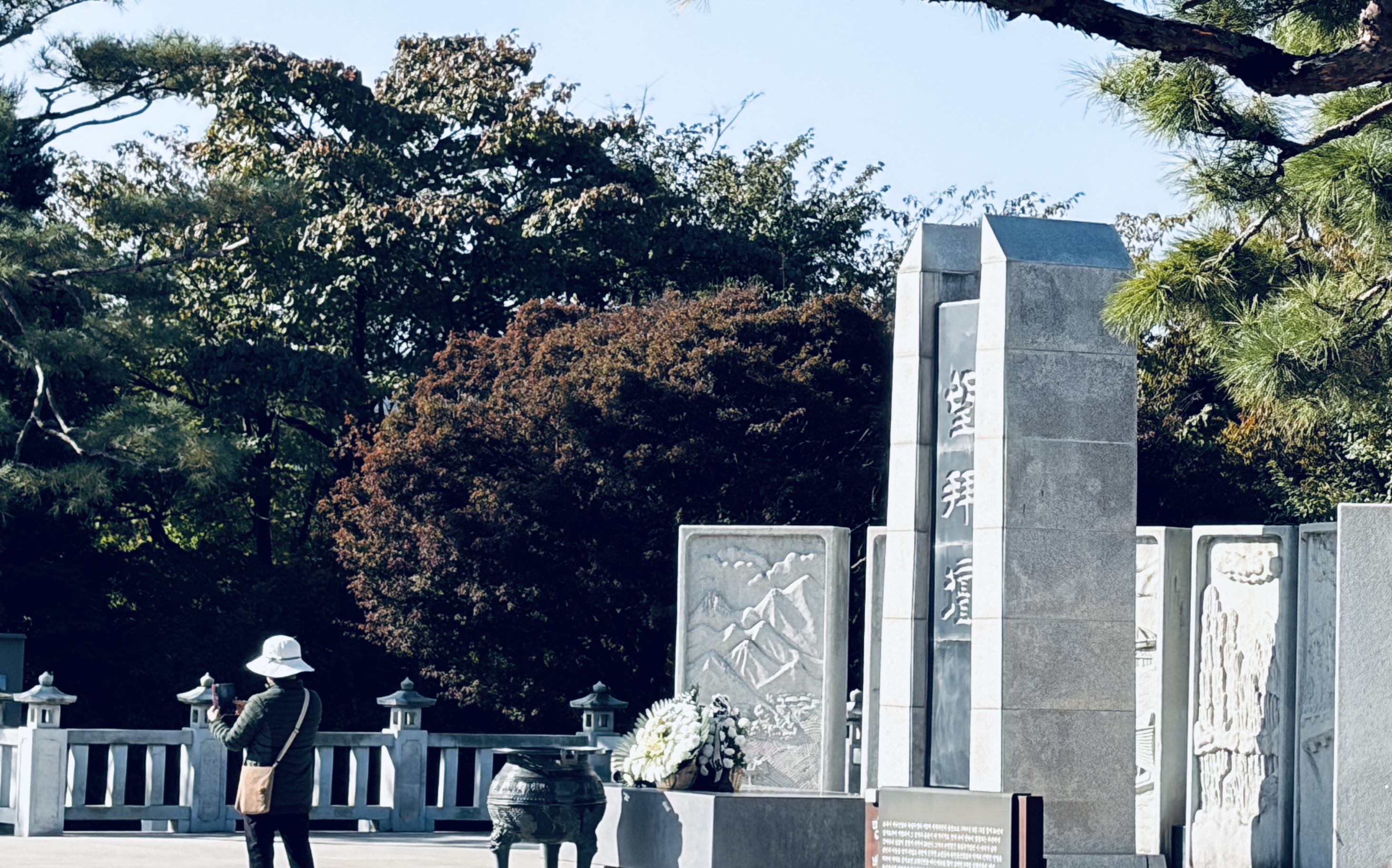
The park contains a lot of memorials for people who fought and died in the war. One of the more noteworthy memorials is the Mangbaeddan memorial, which is a place for people to bow down for their relatives in the North. The freedom bridge is also located here, which is the bridge where the last people moved from the north to the south. Another point of interest was the original railroad to the north and a cargo train that used this railroad to move a lot of weapons during the war. This train was shot by the UN, and was the last train that travelled between the two parts of Korea. The bullet holes were still visible in the train. Another train called the iron horse was also in the park. It used to be a train for passengers, and a common phrase is the following: “Let the iron horse run again”, meaning that people want the two Koreans to be connected again. In the past, Koreans could take the train all the way to europe, which is sadly not possible anymore. The fences of the park were all decorated by ribbons containing text that were hung up by South Koreans for their relatives in the North. It was sad but beautiful to see.
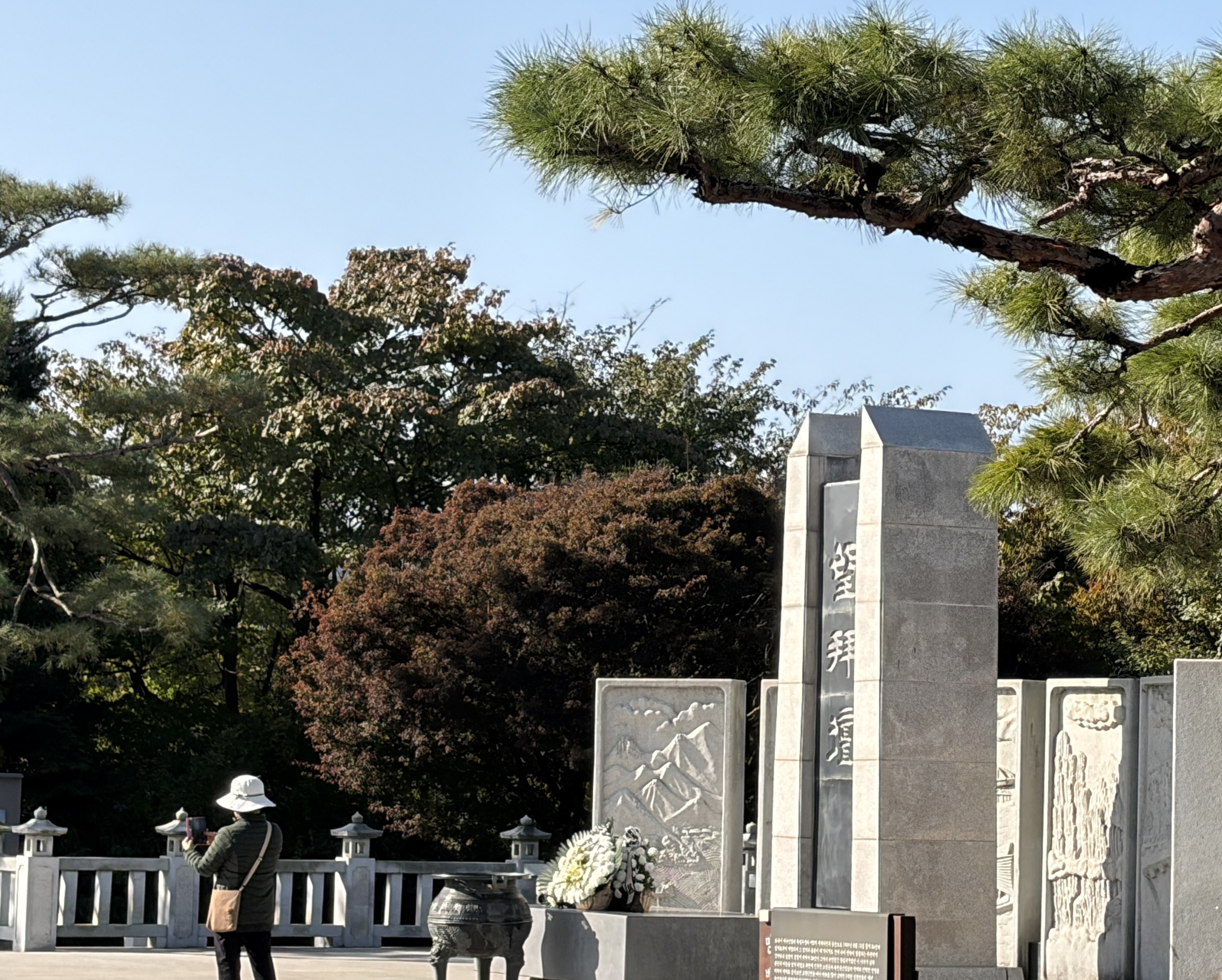
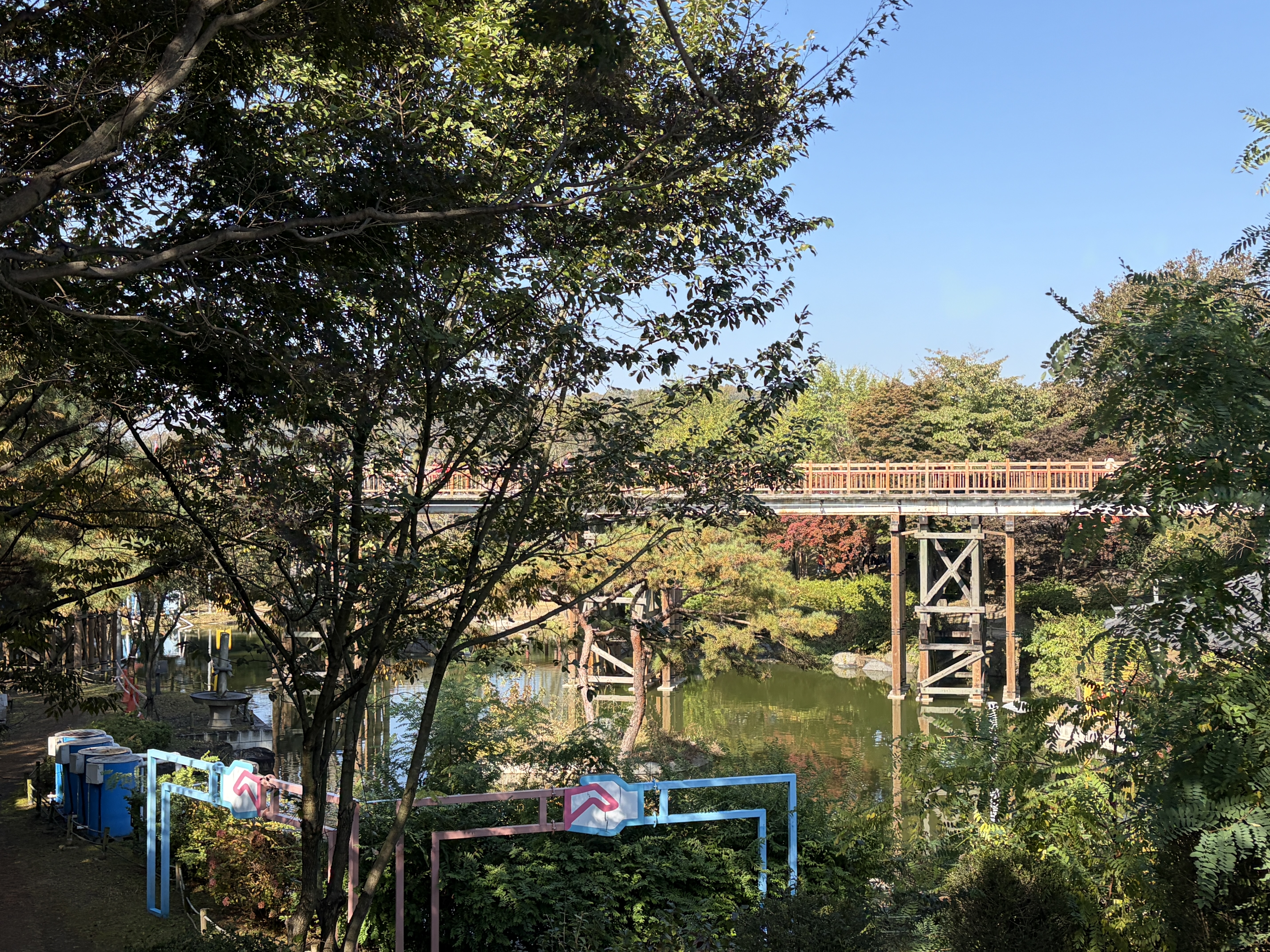
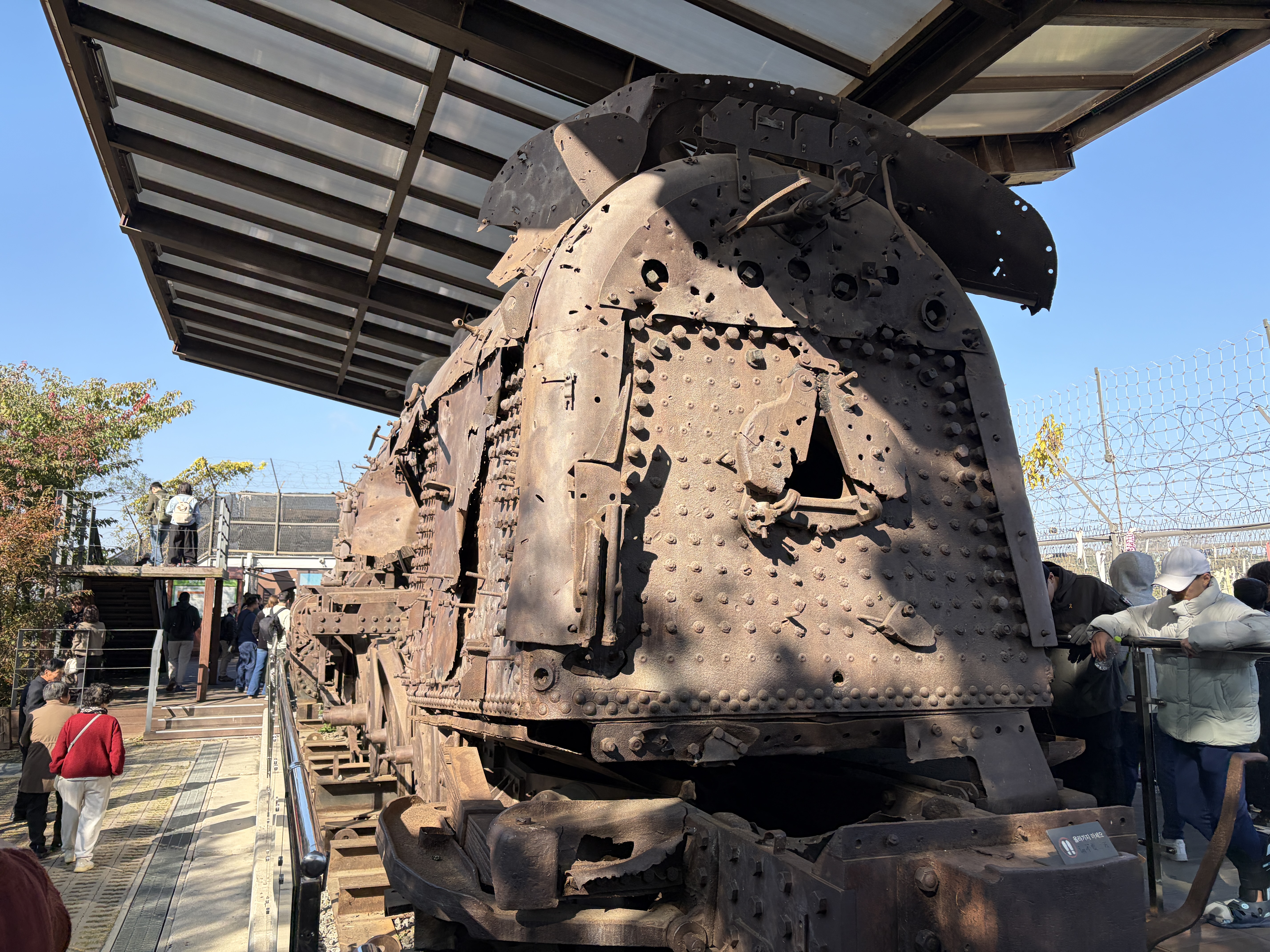
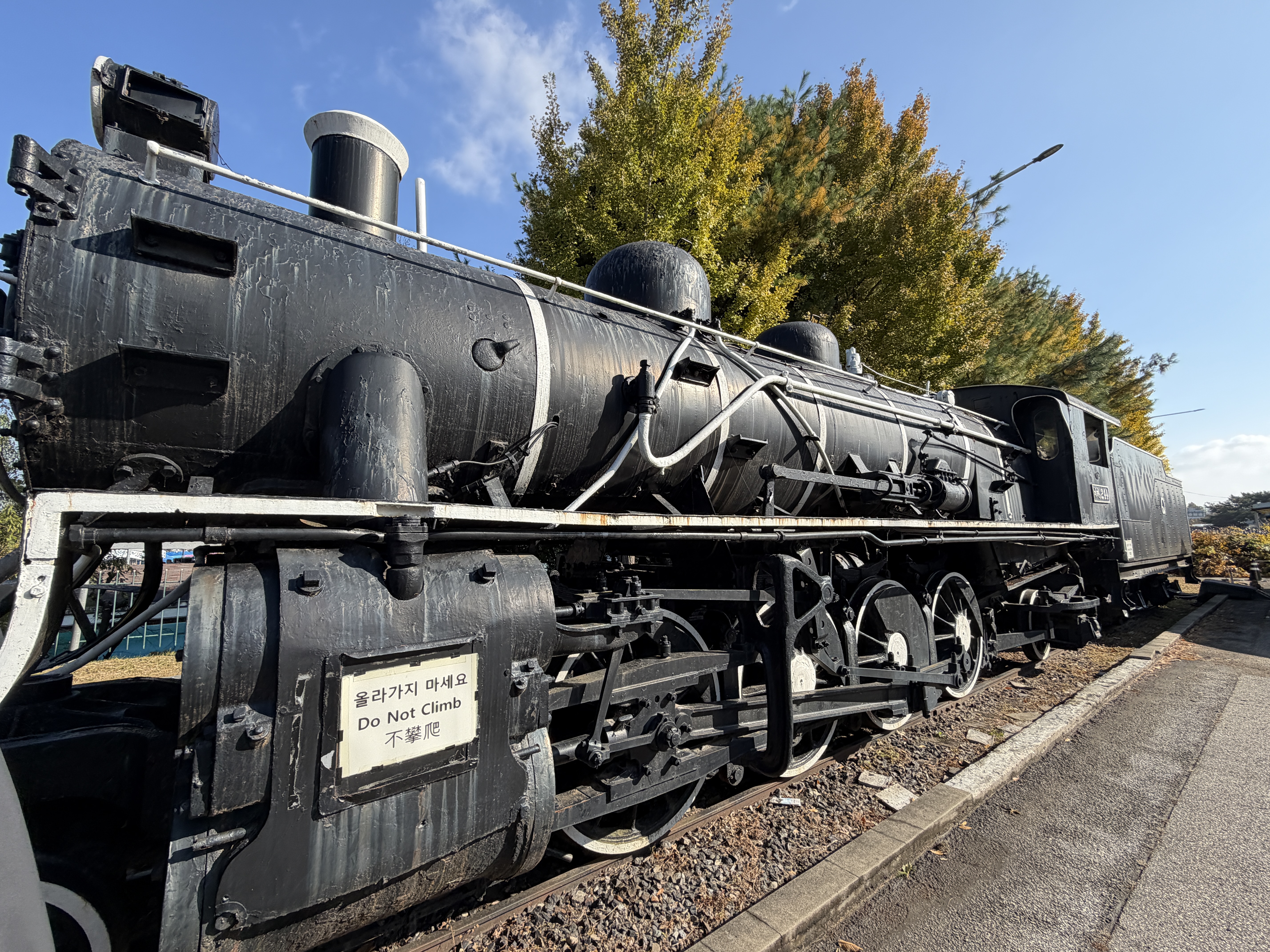
Mangbaeddan memorial in Imjingak Park
Our tour guide told us about the relationships between South Koreans and North Korean defectors. Similarily to what I read in the book “The Girl with Seven Names” (definitely a recommendation), life for North Koreans is tough in South Korea. They get some money for the first few month, but then they have to enter the very tough and fast-moving South Korean economy. And they are often not prepared for it, are seen as lazy, and get fired a lot. This led to a lot of South Koreans looking unfavourably upon the North Koreans. This sense of one country and one folk is slowly dying together with the older generations. Lots of North Koreans thus start their own companies to get some agency. One example is the shop in the park ran by a North Korean. There you could buy North Korean money which is quite rare and also worth nothing. One month salary in North Korea earns you around 5000 won, which is one cup of coffee in the South according to our guide. On the North Korean bills, a member of the Kim family is displayed, he is believed to be a god in North Korea with eternal life.
The last noteworthy thing to mention is that there were so many people af the park due to a marathon. Our guide really was not a fan, she really made fun of them. Apparently there are a lot of marathons around the DMZ all called different things like the peace walk or something similar. It was bizarre.
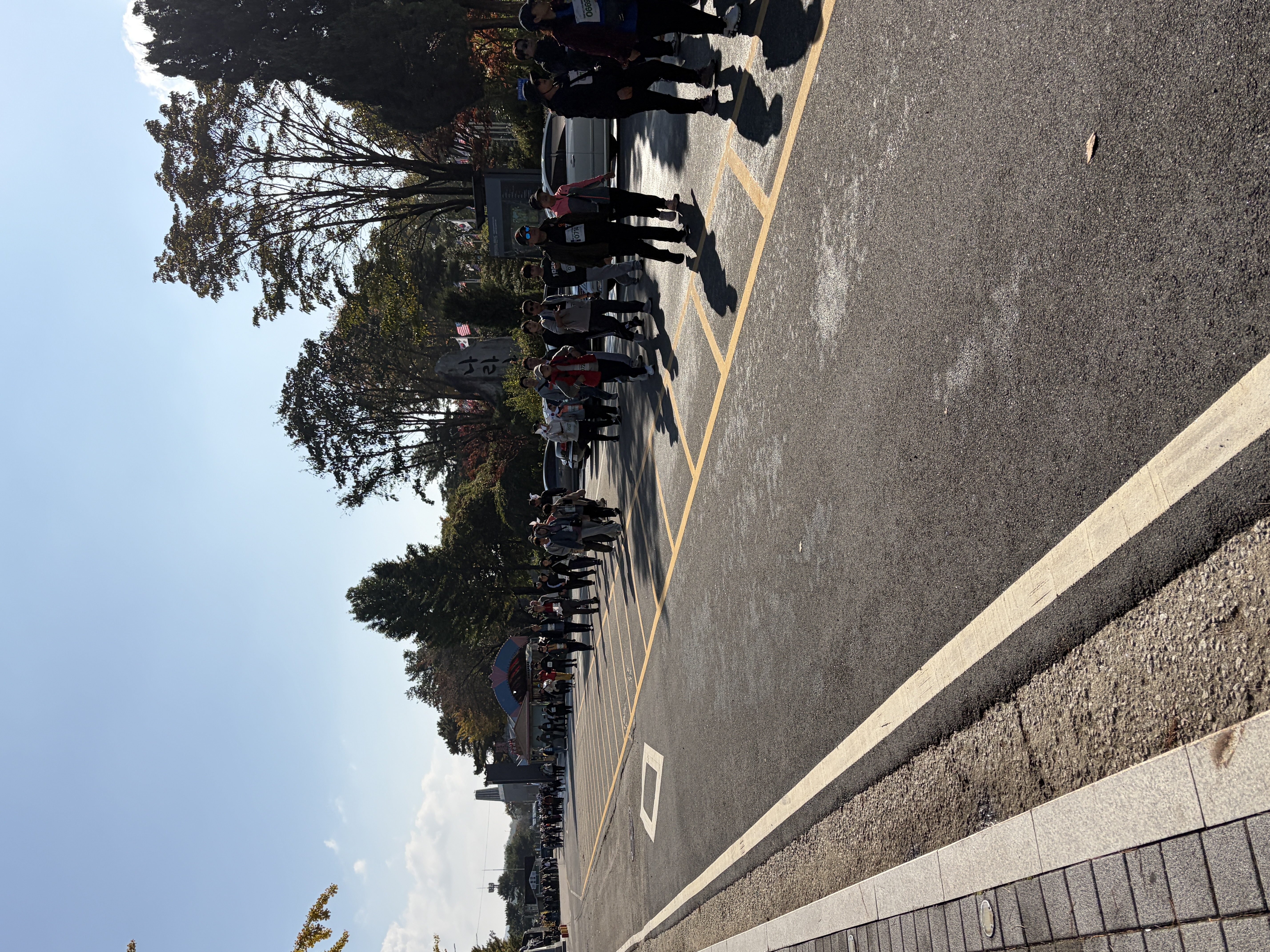
Marathon runners in Imjingak Park
Entering the DMZ
After leaving the park, we drove to the border control of the DMZ. There a military guy would check our passport and our names on the list. However, I feel like he did not really check our passports, he just wanted you to point at your name on the list. He barely glanced at the passports that everyone was so diligently holding up. However, we had one small scare, because we could not find my mom’s name on the list. Before leaving Seoul, our guide had us double check our names and birthdates on the list, and her date was incorrect. So she said she would fix that, no big deal. But something weird happened with fixing it or something, and my mom’s name was only partially on the list, starting in the middle of her seconde name. So we missed this when looking for her name, and we asked for help from the guide. She also seemed to panick a bit, but then pointed at the budgered name. Then the military guy was fine with it, since she was on the list. Even though the name was not fully correct, he did not care and also did not check her passport. What do they even check, I have no idea. It was all very stressful and confusing…
The Third Infiltration Tunnel
Our first step in the DMZ was visiting the Third Infiltration Tunnel. This tunnel was discovered in 1978, and is one of the four known tunnels that North Korea dug to infiltrate South Korea. The creation of the tunnel is very dangerous, since the workers used dynamite to dig the tunnel. This caused a lot of suffocation and accidents during the construction. The tunnel was discovered after a North Korean soldier escaped to the South and triggered a landmine. That soldier sadly lost his leg, but his escape led to the discovery of the tunnel. This was all told to use in a very propoganda-esque video that we watched before entering the tunnel. Seriously, I have never felt so propoganda-ed to in my life. I get that North Korea is bad, but I guess I am just too European for this stuff. The tunnel is 1.6 km long, but the tunnel you enter is only 163 meter long, and goes 73 meter deep underground. The decline is very very steep, they really warn you about this before entering. However, our guide said that the actual true real DMZ is the land beyond our tour locations and filled with mines. If you actually want to enter the true DMZ, you will have to go in the tunnel and then you would technically be in the DMZ, just underground. So my parents decided to just go in a little bit, while me and my sister went all the way to the end. Descending is really a breeze, but all the people going up were really tired and sweaty, so my parents were easily convinced to not go all the way down. The tunnel going down was constructed later and is very tall and wide, however the actual tunnel you enter of the descend is very narrow and low. The tunnel itself was around 2 meters but because of all the reinforcement I had to walk with my head to the side like all the time (I am 1.80m), which was definitely already tiring. This is why you also need to wear a helmet, because you will hit your head. Even with the helmet, every time I hit my head I just jumpscared myself. In the tunnel, they marked the dynamite holes with yellow paint, so you could see where they used dynamite to dig the tunnel. This is also to show the evidence of North Korea’s intention to invade the South, since the North Koreans deny that they dug the tunnel. At the end of the tunnel there is a hole you can look through and this hole looks through another hole which shows a wall which is the border to the North Korean DMZ. So this is the closest you can get to North Korea without actually entering it. We could sadly not bring our phones in the tunnel, so no pictures of the North Korean border for you guys. Then we had to climb back up again, which was indeed a miserable experience. But at the end our tour guide Nancy was cheering us on.
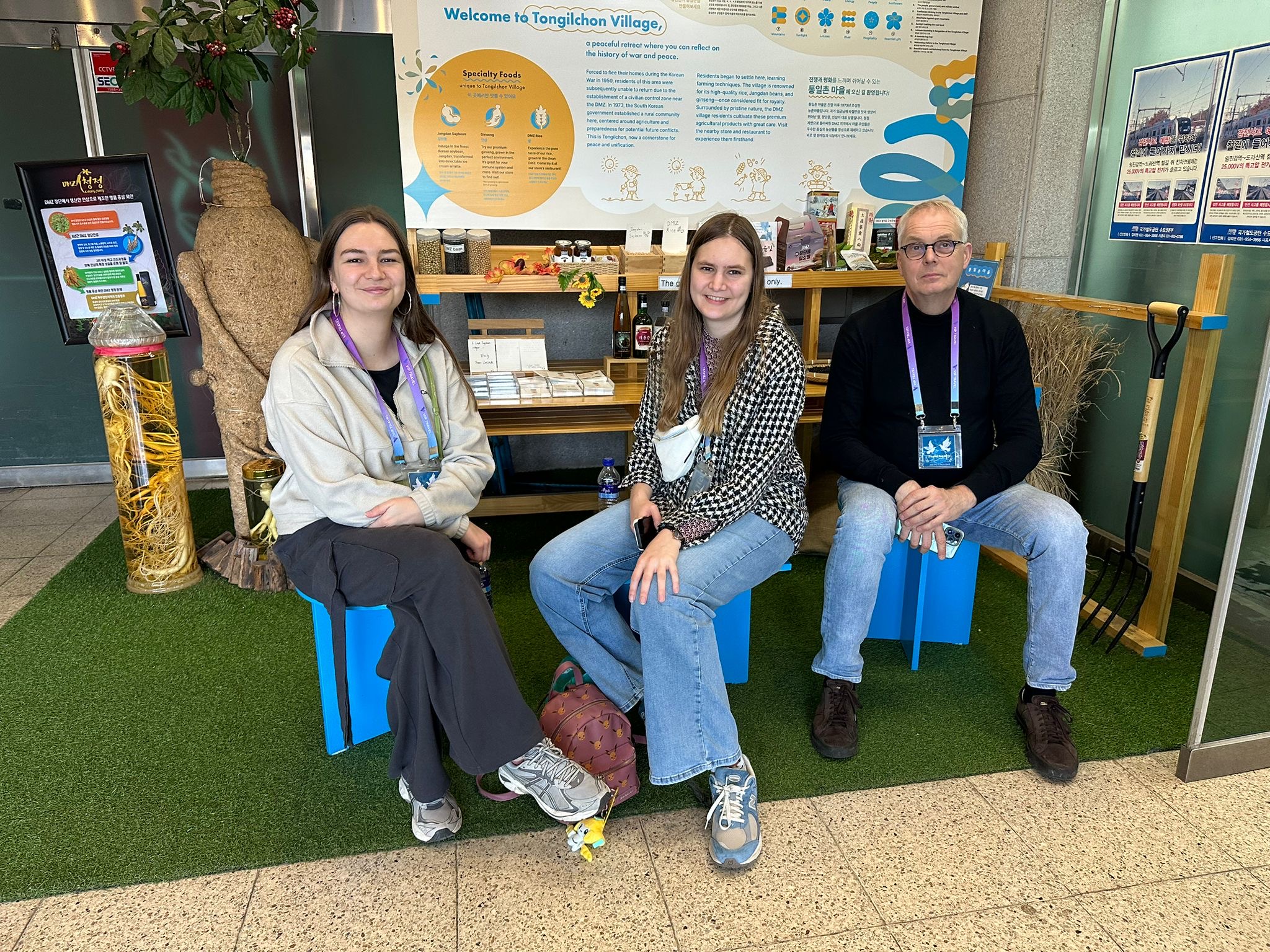
There was also a souvenir shop at the tunnels entrance/exit, so we bought some souvenirs there. I bought some North Korean whiskey/cognac? I don’t know what it is, but it is brewed in North Korea it what they said. I also bought some tea that helps fund a middle school in the unification village (you will learn about that later). Lastly, I also bought a piece of the wire fence from the DMZ, specifically number 61965 out of 150000 pieces. Trump also has one apparently, do with that information what you want. (Of course I also bought an obligatory magnet for the fridge.)
The surrounding area of the third infiltration tunnel is also very touristy, with lots of photo oppurtunities. You can see some of the photo opportunities below, since of course we took a picture with them. But it is all really weird, since the tunnel is so serious and this whole place is so serious, but then you can make fun pictures with bright coloured DMZ letters and fake military guys. Our guide also really stepped in here and quickly took pictures of her whole bus, since she wanted everyone to have a picture but also be back in the bus on time, since we were on a tight schedule. You can only be in the DMZ for a limited amount of time (again all very serious).
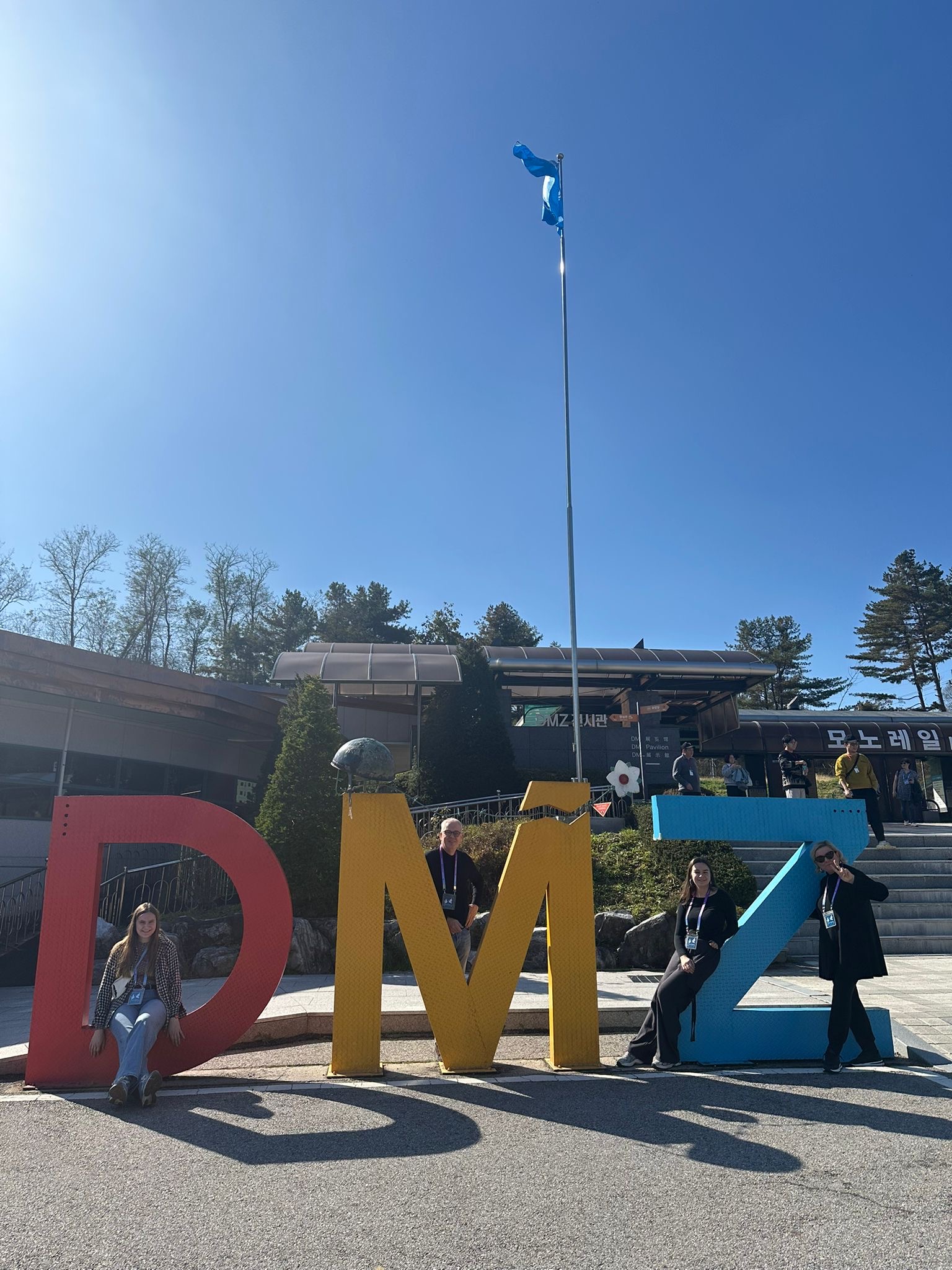
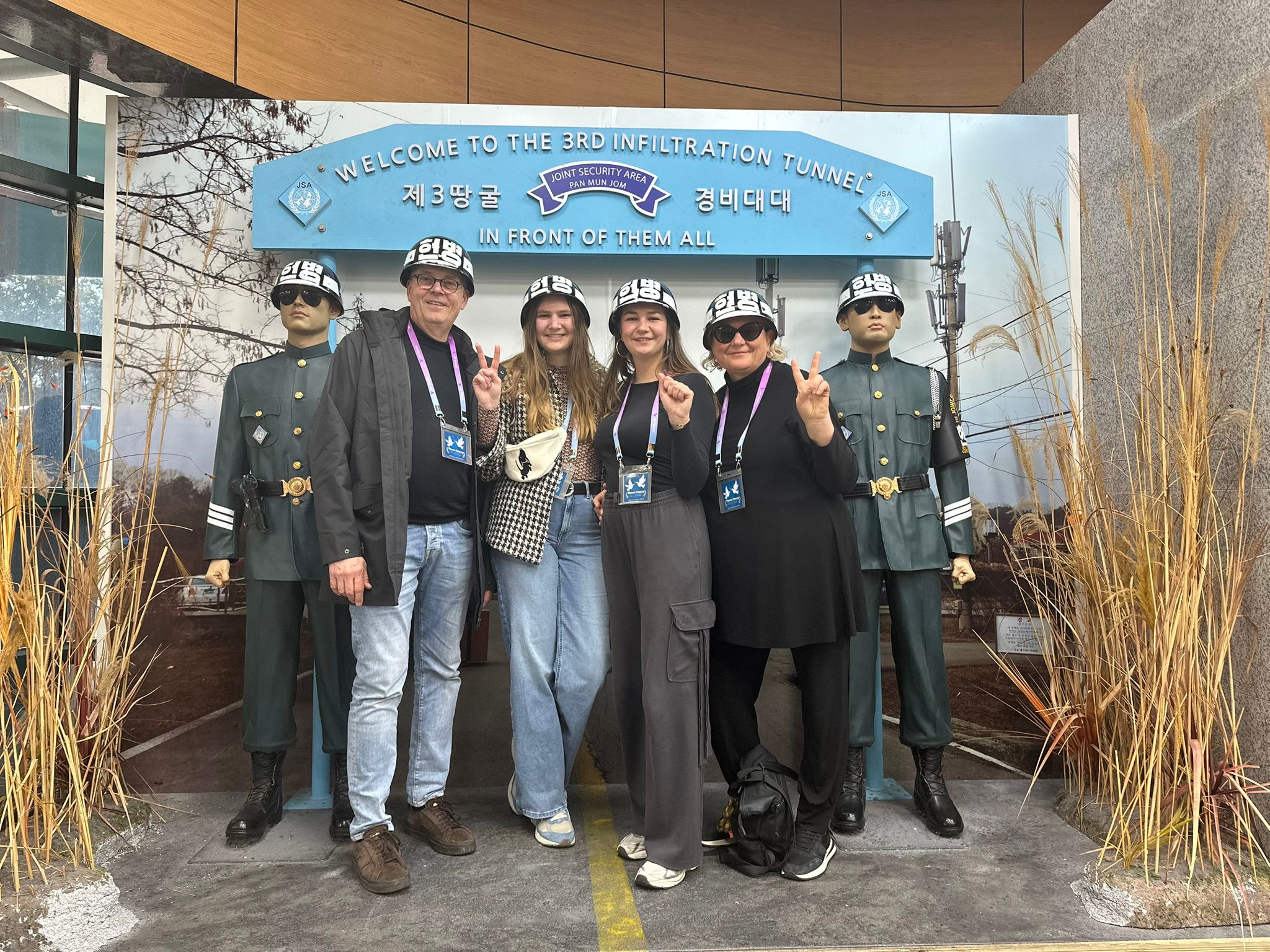
Some photo props in the DMZ, yes kind of dystopian.
Dora Observatory
We continued with team Nancy (that is what the tour guide called us) to the Dora Observatory. Dora Observatory is a place where you can look into North Korea with binoculars. There is also a cafe here, but we did really did not have time to go there. We were not allowed to take pictures of certain North Korean mountains and of the area that the binoculars were pointing at. However, we were allowed to take pictures of some other mountains that are also North Korean? It was vague to me. Anyways, before looking through the binoculars, we got an explanation of what we were looking at. For example, the North and the South had a flag war at some point. Both countries wanted to have the biggest flag posts so they kept building bigger and bigger flag posts. At some point, South Korea gave up, since of course it is pointless. Currently the flag on the pole is 200 kg and is so big that the wind can barely hold it up, so you can almost never see it clearly. According to South Korea, the village surrounding the flag is a fake city with only the general structure but no floors for example. They also said that they let people walk their for propoganda purposes, but that there are no actual residents. However, we could see a city further down where there are actually people living. That city also had a hollywood-esque sign on the mountain. You could also look into the actual DMZ area. According to our guide, sometimes you can see land mines going off, because of animals triggering them… Contrary to this, she also said at some point that the DMZ is one of the purest nature reserves in the world, since no humans enter it, but like animals get killed, so not very peaceful. There is also one North Korean watch tower you can see, and sometimes you can see a North Korean soldier standing there. I at first could not see one, but the guy next to me saw a guy standing on it. He explained to his girlfriend how to spot him, and then I could see him too. It was not very clear, but you could see the vague outline of legs.
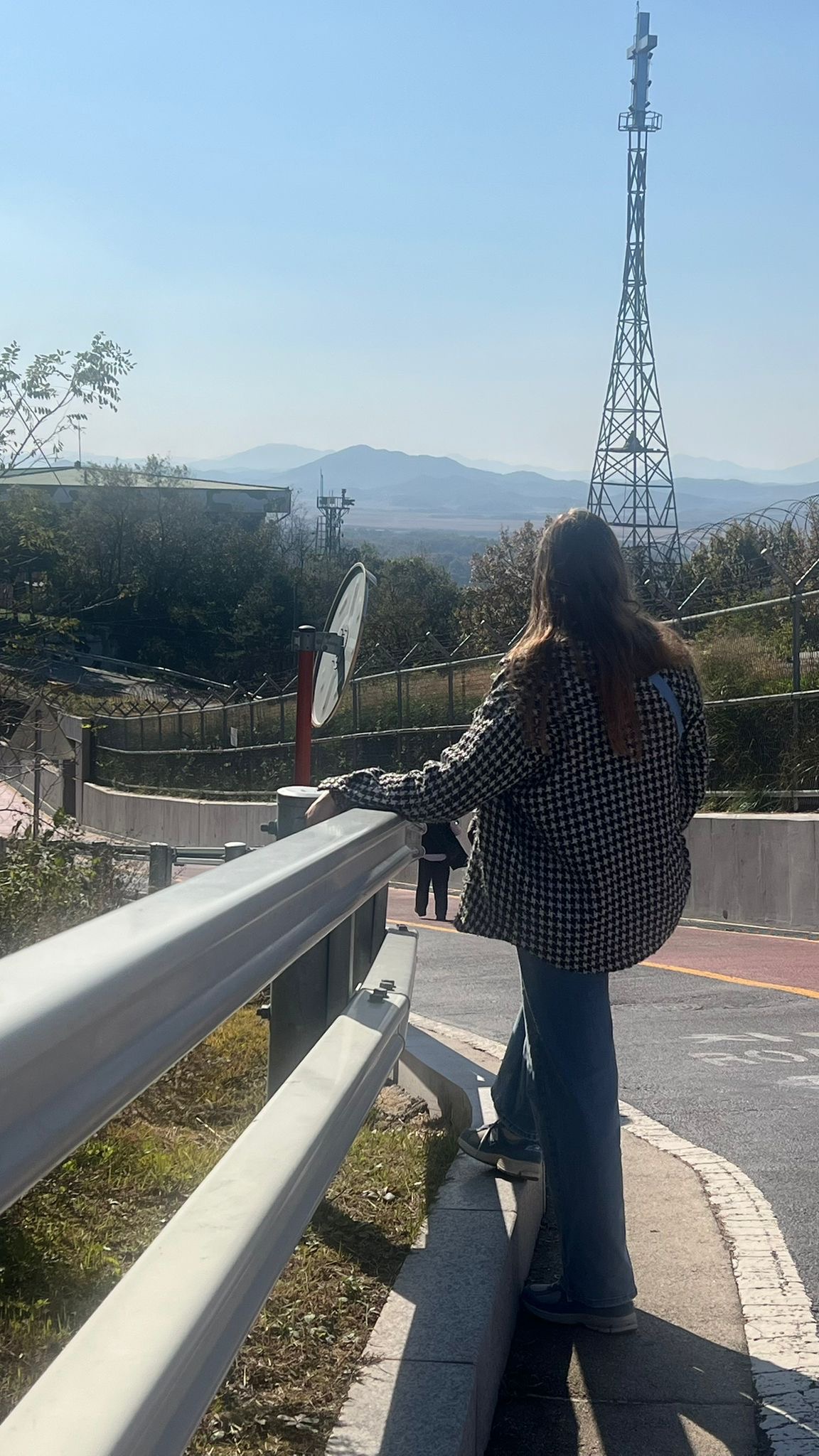
The side of the Dora Observatory where we were allowed to take pictures into North Korea.
Unification Village
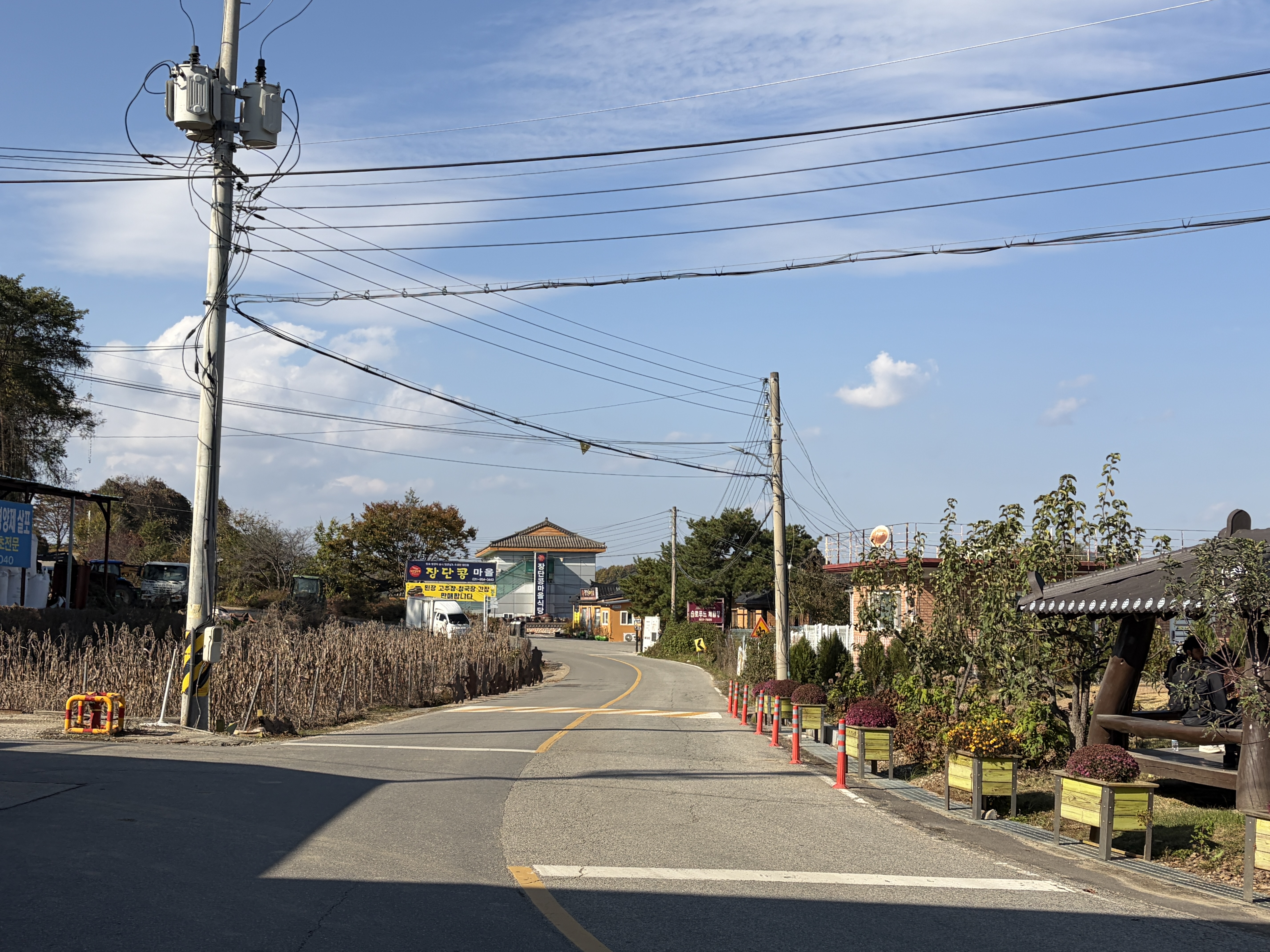
The last stop of our DMZ tour was the Unification Village. This village is located in the DMZ area, which officially belongs to the United Nations. Basically, this village was a victim of the Korean war, since the border between the North and South was abritrarily drawn, and the village ended up in the DMZ. The village has around 100 families with around 500 people living there. According to our guide, the residents of the village are not allowed to leave the village permanently until they are 40 years old. They can leave temporarily with a special permit, but they have to return. There is a primary school, but no middle school or high school. So the kids have to go to the South to finish their education, and have to be back in the village before a curfew. It sounds absolutely terrible, and I do not know how this is okay. As a compensation, they are called “the chosen ones” by the people in South Korea (chosen for what I have no idea?), and they do not have to pay taxes, since they are officially living in the UN area. The villagers are mostly farmers, and they grow rice without pesticides, which is apparently very healthy and popular in South Korea. South Koreans sometimes go on this tour, just to buy rice from the villagers. They also sell Gingseng tea, which is used for funding a middle school in the village itself. We also bought some of this tea, but I am not really a fan to be honest.
We are not allowed to walk freely in the village anymore, to give the villagers more peace and privacy. But we were allowed to visit their canteen for a buffet lunch. It was not really that good, but it did fill us up. There is also a small shop next to the canteen where you can buy the rice and other food/souvenirs from the village. After lunch, we went back to the bus and left the DMZ.
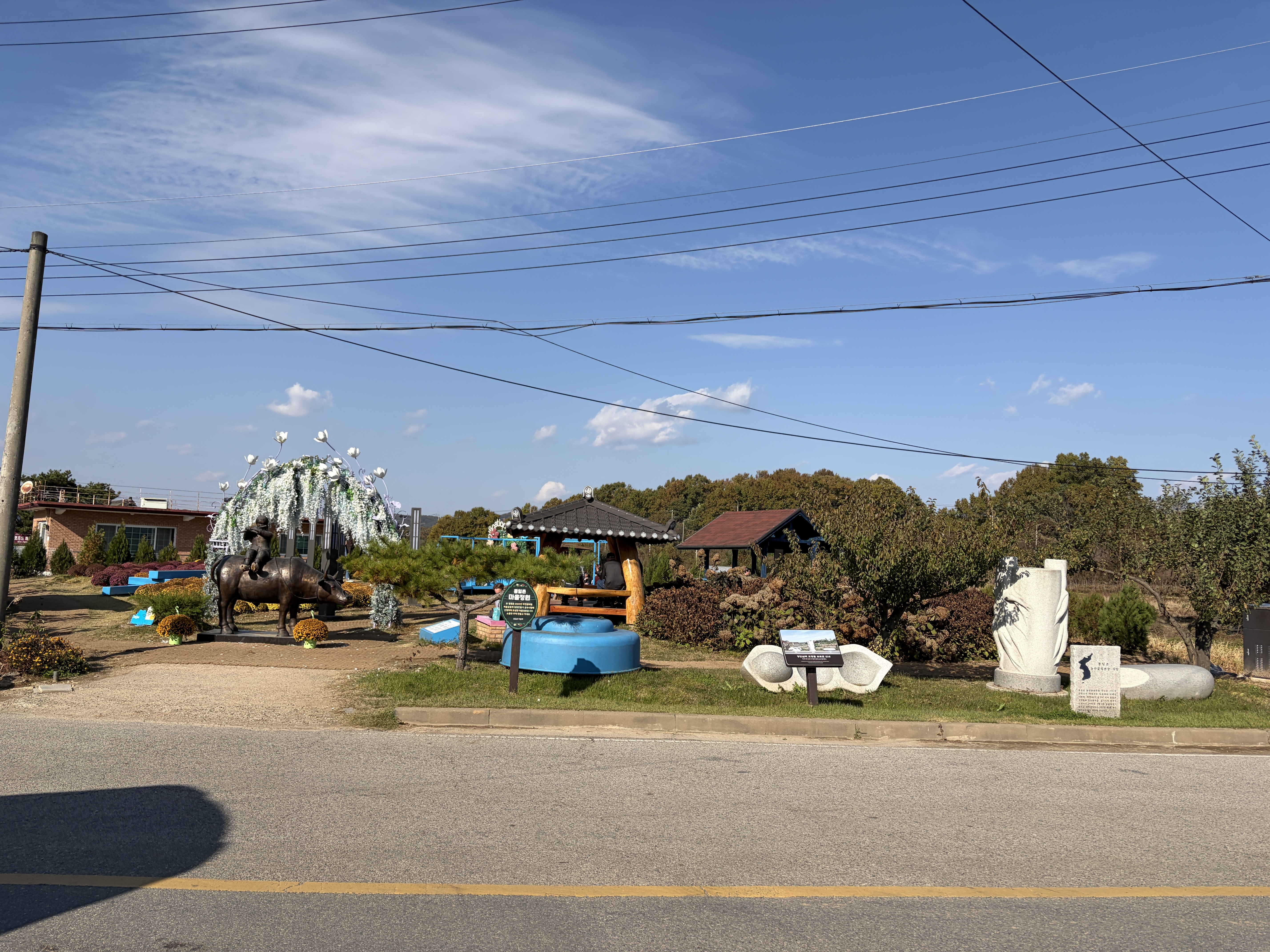
Unification Village
After our day at the DMZ, we went back to Seoul to fill the remainder of the afternoon and evening.
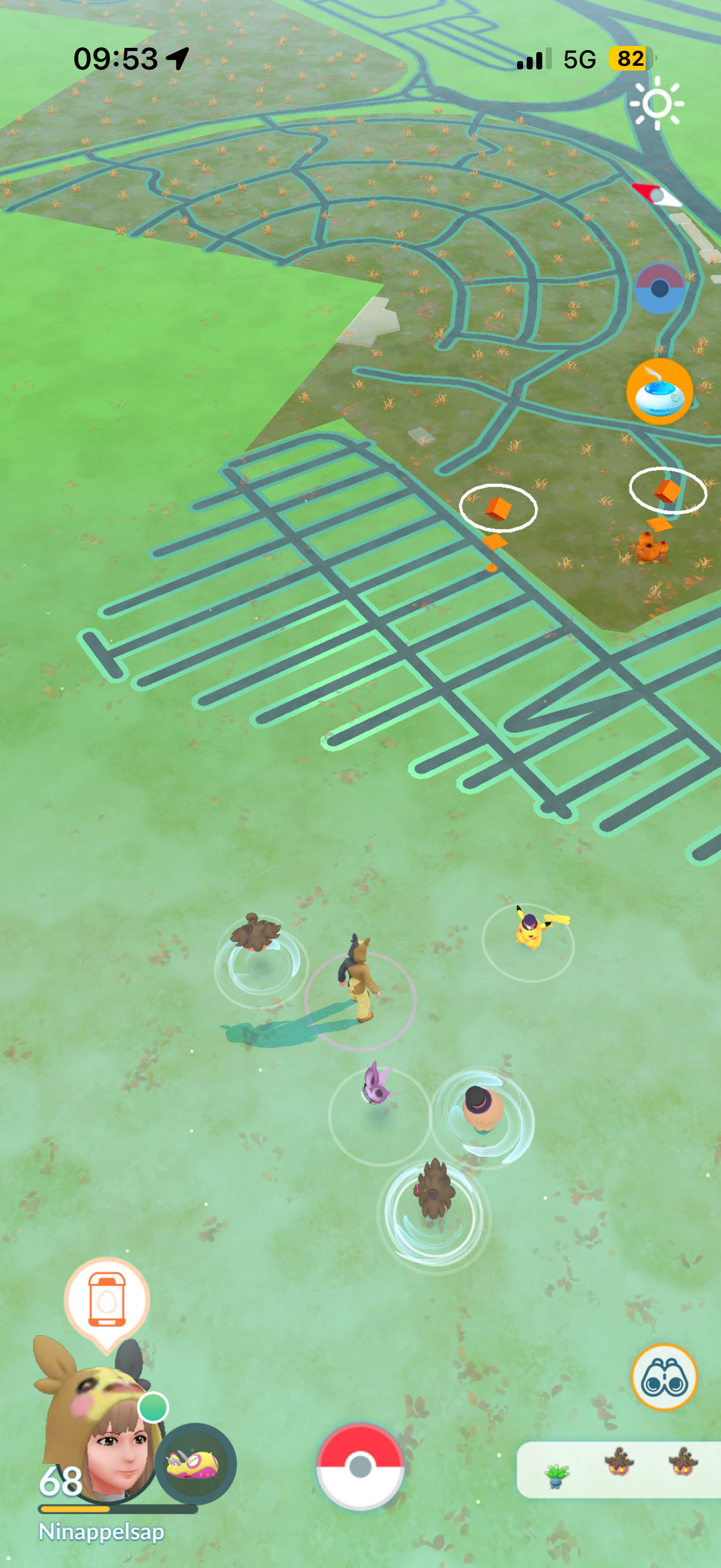
Small fun note, Pokémon Go was completely down in the DMZ, which of course makes a lot of sense. At Imjingak Park you can see the border of the game, showing clear evidence of the game using a grid structure to map the world.
Pokémon Go map showing the DMZ border